Shotcrete & Gunite
Overview
Apply Shotcrete And Gunite To The Highest Standard, Anywhere, Anytime.
The RIX Group is the market leader in all aspects of shotcrete and gunite. From structural works to architectural finishes, we are equipped to apply wet-mix and dry-mix solutions for projects of all sizes.
Our multi-skilled teams spray over 30,000m3 of shotcrete across the Asia Pacific each year, always safely and to the highest quality. Get started with the largest ground engineering shotcrete applicator in Australia.
Contact Our Shotcrete Specialists
Shotcrete & Gunite Applications
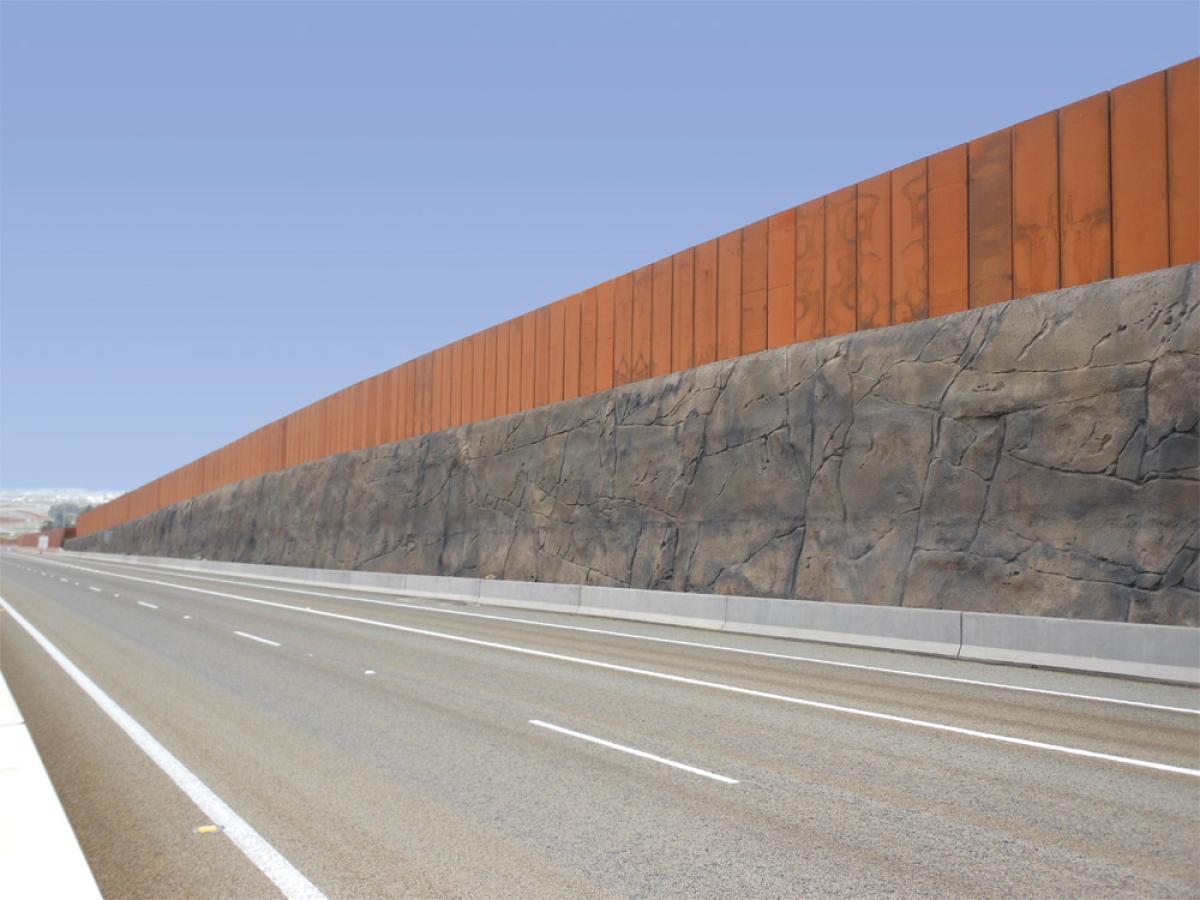
- Shotcrete retaining walls
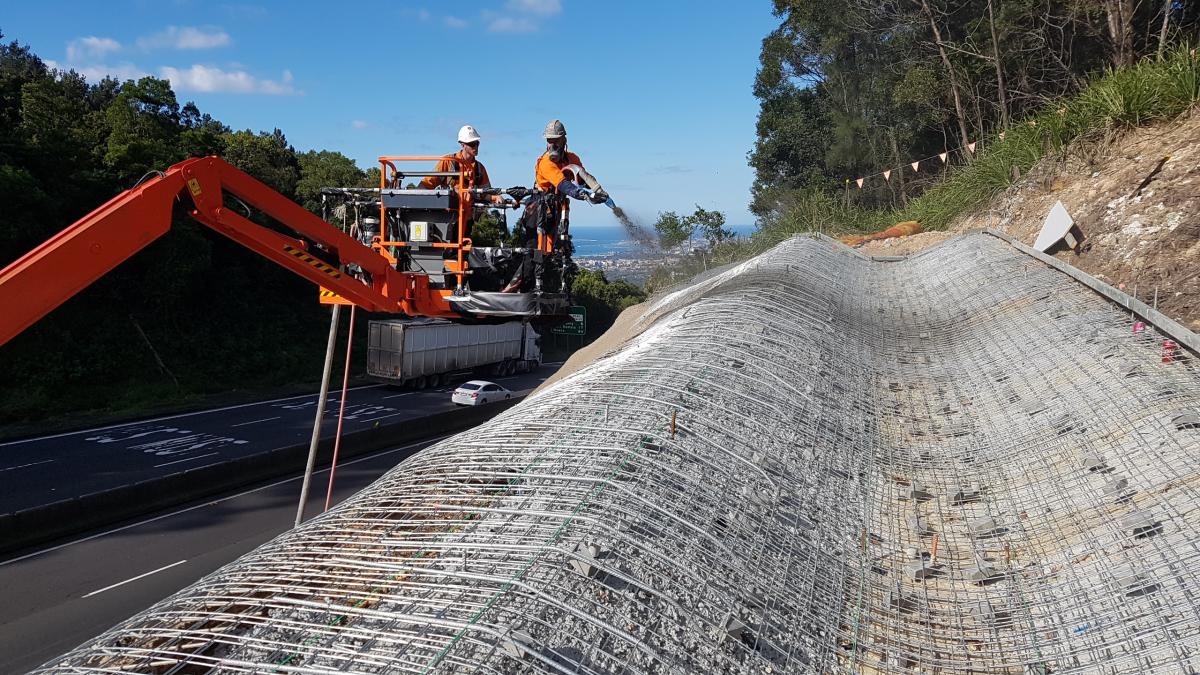
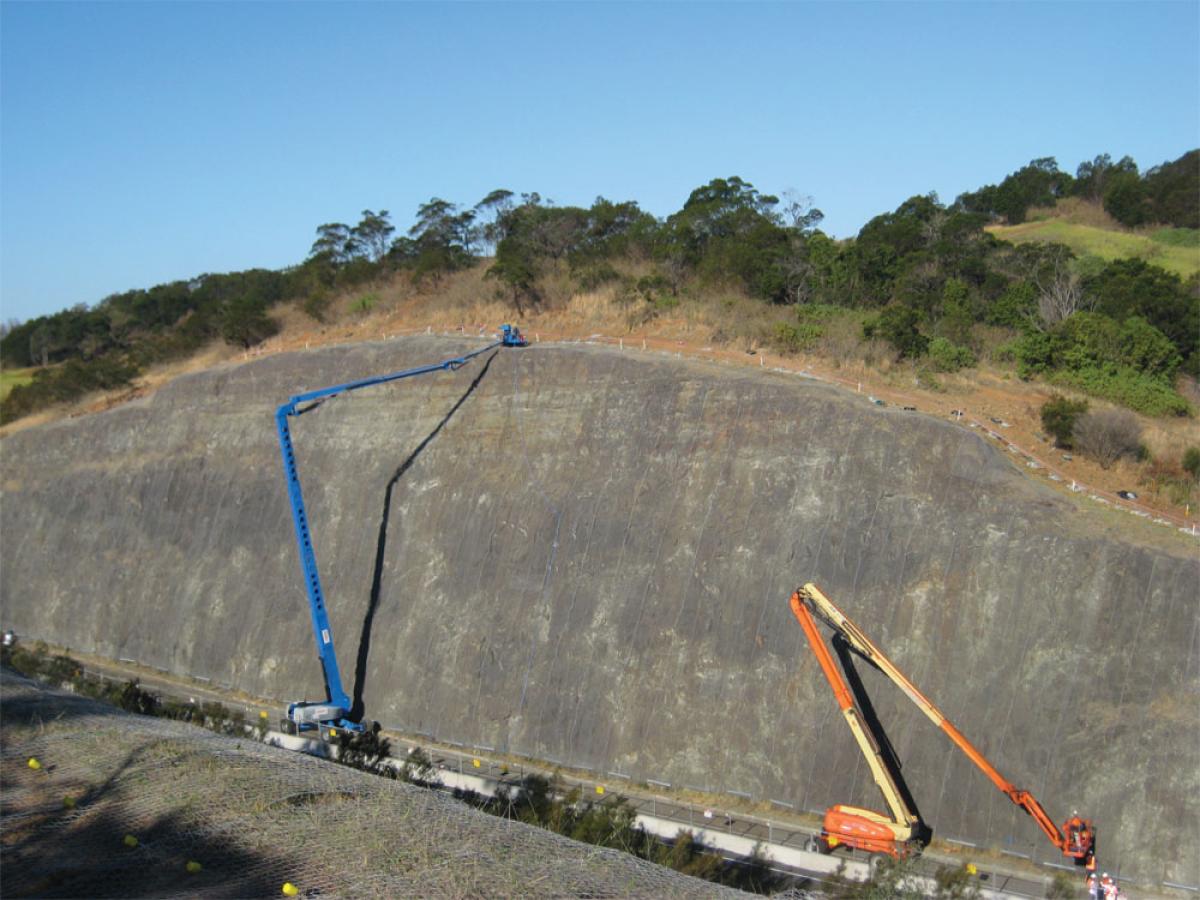
- Slope stabilisation
- Road and rail embankments
- Mine box cuts, portals, high walls
- Mine and tunnel underground roof support
- Dam spillways
- Water tanks
- Sea walls
- In-ground drain channels and culverts
- Tele remote shaft lining
- Swimming pools
- Ponds and water features
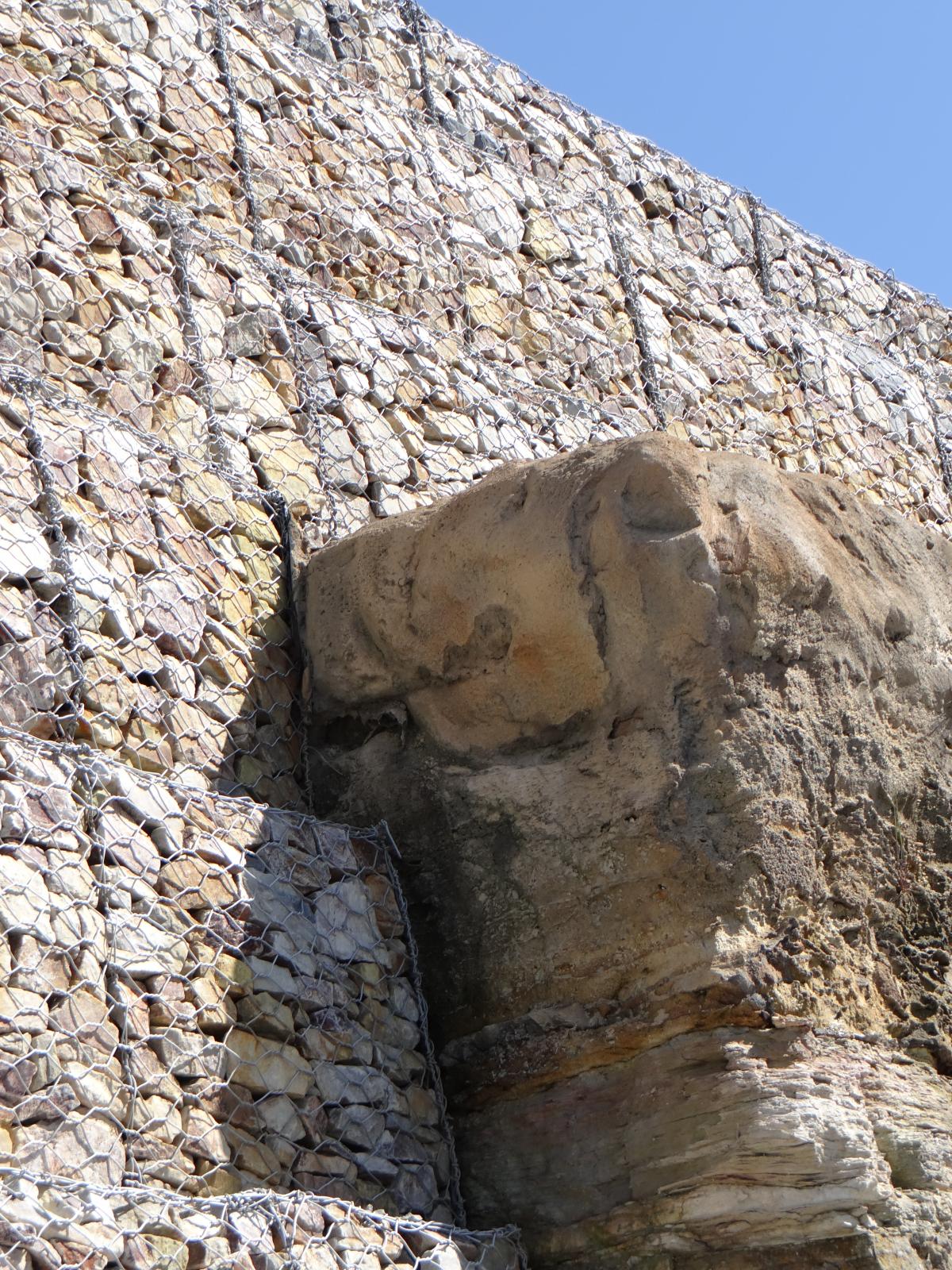
- Simulated rock and block finishes/mock rock
Fast, Flexible And Designed To Endure
Experience the benefits of shotcrete with The RIX Group.
Efficient application
Cut installation time and labour costs without compromising quality. Sprayed directly onto the prepared surface, both shotcrete and gunite can be applied quickly in controlled layers. This efficient approach helps you save on formwork, access equipment, and complex pour setups.
Added strength
Reinforce demanding structures like retaining walls with tough concrete layers built to handle pressure, load and exposure. Applied at high velocity, shotcrete compacts as it hits the substrate, improving compressive strength and long-term durability.
Strong adhesion
Achieve a reliable, long-lasting bond. Shotcrete grips the prepared surface as soon as it’s applied, even on vertical, overhead and uneven areas. With proper preparation, it delivers secure adhesion for concrete repairs, structural strengthening, protective linings, and slope stabilisation.
Design versatility
Create all kinds of concrete features with minimal formwork. Shotcrete follows practically any substrate shape, with layer thickness suited to the specifications and site conditions. This adaptability makes it ideal for irregular and architectural structures.
Low permeability
Protect structures against water ingress. High-velocity spraying compacts the concrete on impact, creating a dense, durable layer that helps reduce moisture absorption and improve abrasion resistance. This is especially valuable for tanks, channels, and other water-retaining structures.
Easy access
Reach hard-to-access areas with ease. Crews can deliver shotcrete through hoses to the workface, reducing the need for bulky formwork or heavy placement equipment. This practical approach is often recommended for tunnels, mines, steep slopes, underbridges, confined spaces and repair zones.
Partner With Australia’s Shotcrete And Gunite Experts
A trusted track record
Our crews bring decades of combined experience across the Asia Pacific. Each application is backed by rigorous quality control, in-house technical design, and operational practices refined over thousands of cubic metres in the field.
Custom solutions
We ensure every application meets your project requirements with precision. From initial consultation to successful completion, our shotcrete and gunite solutions are tailored to achieve your objectives on time and on budget.
Continuous innovation
We invest in the most advanced equipment, always exploring new technologies, techniques, and materials to improve our shotcrete and gunite services. This is how we keep delivering stronger results, safely and efficiently.
Our Proven Concrete Spraying Process
1. Mix design
Every project starts with selecting a suitable concrete mix for the specific application.
To ensure high performance, consistency and durability, we consider the site conditions, structural requirements, exposure, required thickness, placement method and final finish.
2. Preparation
Surface preparation is critical to the performance of shotcrete and gunite. The substrate must be clean, stable, sound, and ready to support strong adhesion.
Preparation may include removing dust, oil, loose concrete, vegetation, debris or other contaminants.
Depending on the site, it can also involve pressure washing, trimming, installing reinforcement, dampening the surface or masking surrounding areas to protect against overspray.
3. Application
This type of concrete is applied using specialist spraying equipment and controlled, high-velocity placement.
With gunite, dry cement and aggregate are conveyed through the hose before water is added at the nozzle. The nozzle operator controls the water flow during placement.
With shotcrete, the concrete is mixed before pumping. It is delivered through the hose to the nozzle, where compressed air projects it onto the prepared surface.
On impact, the concrete compacts against the surface, forming a dense, well-bonded layer.
4. Finishing
The finish depends on your project requirements. Where stabilisation, structural support and protective lining are priorities, concrete is typically left as-sprayed.
For a cleaner profile or more architectural result, the surface can be screeded, trimmed, shaped or lightly trowelled to achieve the desired form and finish. In this case, the mix design, aggregate size and finishing technique must be planned in detail before any spraying begins.
5. Curing
After application and finishing, this concrete must retain sufficient moisture for proper cement hydration.
Depending on the specification and site conditions, curing may involve applying a curing compound, keeping the surface damp, covering the area or using another approved method.
This improves surface quality, minimises shrinkage cracking, and helps the concrete achieve the required performance standard.
FAQs
What is Shotcrete?
Shotcrete, or sprayed concrete, is a method in which concrete is applied through a hose and nozzle at high speed onto a reinforced substrate, rather than poured into formwork. It’s commonly referred to as shotcrete or gunite, depending on the application method.
When applied by skilled operators, this concrete forms a dense, well-bonded layer that can strengthen structures, stabilise ground, protect surfaces and create complex shapes quickly.
What is the difference between gunite and shotcrete?
The difference between gunite and shotcrete comes down to when water is added to the concrete mix.
Gunite is a dry-mix process, where dry cement and aggregate are carried through the hose and mixed with water at the nozzle. On the other hand, shotcrete is a wet-mix process, where the concrete is mixed with water before it is pumped and sprayed into place.
Both methods use high-pressure application to place concrete onto a prepared surface. The right choice depends on the project size, access, finish, structural requirements and level of control needed during application.
Gunite gives the nozzle operator greater control over the water content as the material is sprayed. This can make it useful for repairs, detailed shaping and smaller or more complex applications.
Wet-mix shotcrete is often preferred for larger projects because the mix is prepared before spraying. This can improve consistency, reduce dust, minimise rebound and support faster application across larger areas.
If you’re not sure which method is most suitable for your requirements, contact our expert applicators for tailored advice today.
Why choose shotcrete over poured concrete?
Shotcrete delivers the same core benefits as conventional concrete, including high compressive strength, thermal mass, fire resistance and low permeability. However, it stands out for its ease of placement and increased density.
Because shotcrete is projected at high velocity, it instantly compacts to reduce voids and form a dense, well-bonded layer.
Additionally, as it’s sprayed directly onto the surface, the concrete can bond to vertical, overhead, curved and hard-to-access areas.
This makes it suitable for structures where traditional poured concrete can be impractical, such as tunnels, retaining walls, pools, bridges, tanks, embankments and architectural features.
When is shotcrete suitable?
Shotcrete is used across civil construction, mining, infrastructure, water-retaining structures, repair works and architectural finishes.
Favoured for its flexibility, cost efficiency and strength, this method is especially suitable for projects where concrete needs to be applied to vertical, overhead, curved or irregular surfaces.
Common applications include:
- Retaining walls and piled wall facings: For stabilisation, reinforcement and long-term ground support.
- Tunnels, mines and underground works: For excavation support, linings and rock stabilisation.
- Slopes, embankments and channels: For erosion control, soil retention and surface protection.
- Dams, reservoirs, tanks and canals: For water-retaining linings and concrete protection.
- Bridges, wharves and civil structures: For concrete repair, strengthening and refurbishment.
- Pools, ponds and water features: For free-form shapes, curved walls and durable water-retaining structures.
- Architectural and free-form structures: For domes, climbing walls, sculptures, landscaping features and themed environments.
- Industrial protection works: For fire protection, refractory linings, pipeline encasement and protective coatings.
How is shotcrete applied?
Shotcrete is a wet-mix concrete, whereby cement is mixed with aggregate and water before it reaches the hose.
This wet concrete is pumped to the nozzle, where high-pressure air projects it onto the surface at high velocity. From here, it’s applied in layers to build up the required thickness.
As the mix is prepared before spraying, shotcrete offers strong control over water-cement ratio, consistency, and strength. This makes it well-suited to larger projects where speed, volume and uniform quality are paramount.
For example, it’s often used for tunnels, retaining walls, swimming pools, tanks, civil infrastructure, slope stabilisation and structural repair.
This method generally produces less dust and rebound than dry-mix spraying. It can also be finished for structural or architectural purposes, although sharp details, tight returns and complex shapes require careful planning and skilled application.
How is gunite applied?
Gunite works by feeding a dry blend of cement and aggregate into a spraying machine.
This dry mix is pushed through a hose using compressed air and then mixed with water at the nozzle immediately before it reaches the surface.
Once the mix hits the surface, the force of the spray compacts it into place. This helps create a dense, well-bonded layer on vertical, overhead or irregular areas.
The nozzle operator controls the amount of water added during application. Expertise is essential at this stage, as too little water can prevent proper compaction, while too much water can make the mix slump or lose strength.
This dry process gives operators precise control over placement, making it particularly helpful where the thickness, finish or shape demands careful management.
As a result, this method is typically used for repair work, smaller-volume projects, overhead surfaces, detailed shaping and sites with limited access.
What surfaces can shotcrete and gunite be applied to?
Shotcrete and gunite can be applied to a wide range of prepared surfaces, including concrete, masonry, rock, soil, steel reinforcement and shaped formwork. It is often used on vertical, overhead, curved and uneven areas where poured concrete would be difficult to place.
For the best result, the surface needs to be clean, stable and properly prepared before spraying begins. Dust, loose material, oil, vegetation, standing water or weak concrete can reduce adhesion and affect the final result.
Some surfaces may also need reinforcement, mesh, anchors, or support systems to help the concrete hold its shape and meet the required structural performance.
Do you provide shotcrete and gunite services across Australia?
Yes. Our experienced applicators are equipped to deliver projects across Australia and the Asia Pacific. Contact us today to discuss your requirements and organise gunite or shotcrete services.
Contact The RIX Group
Need a quote or do you have a general enquiry? Please complete our online form and one of our team members will be in touch.