Retention and Foundation Piling
Overview
Create a steady and solid foundation on any site with cost-effective concrete piles.
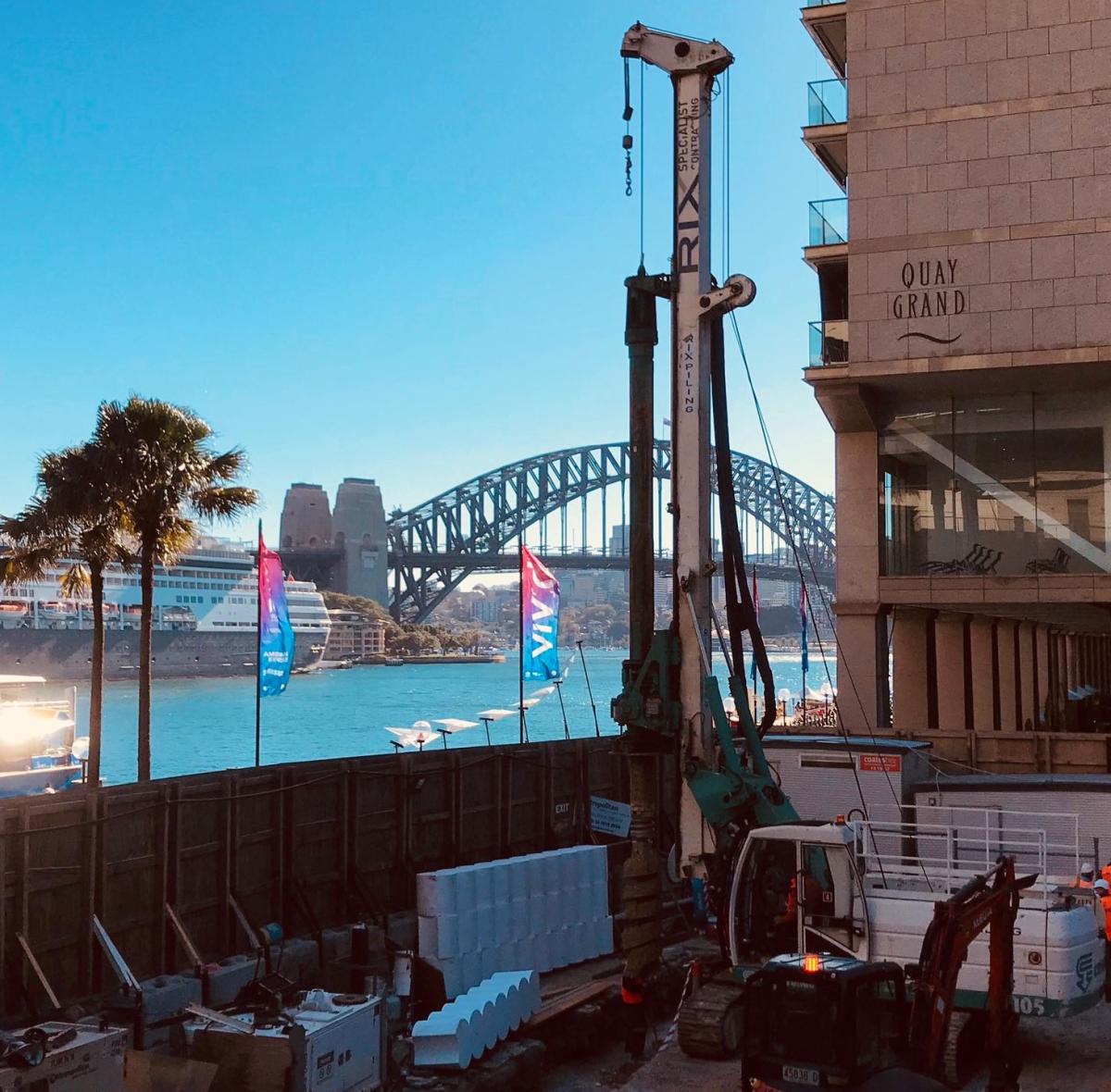
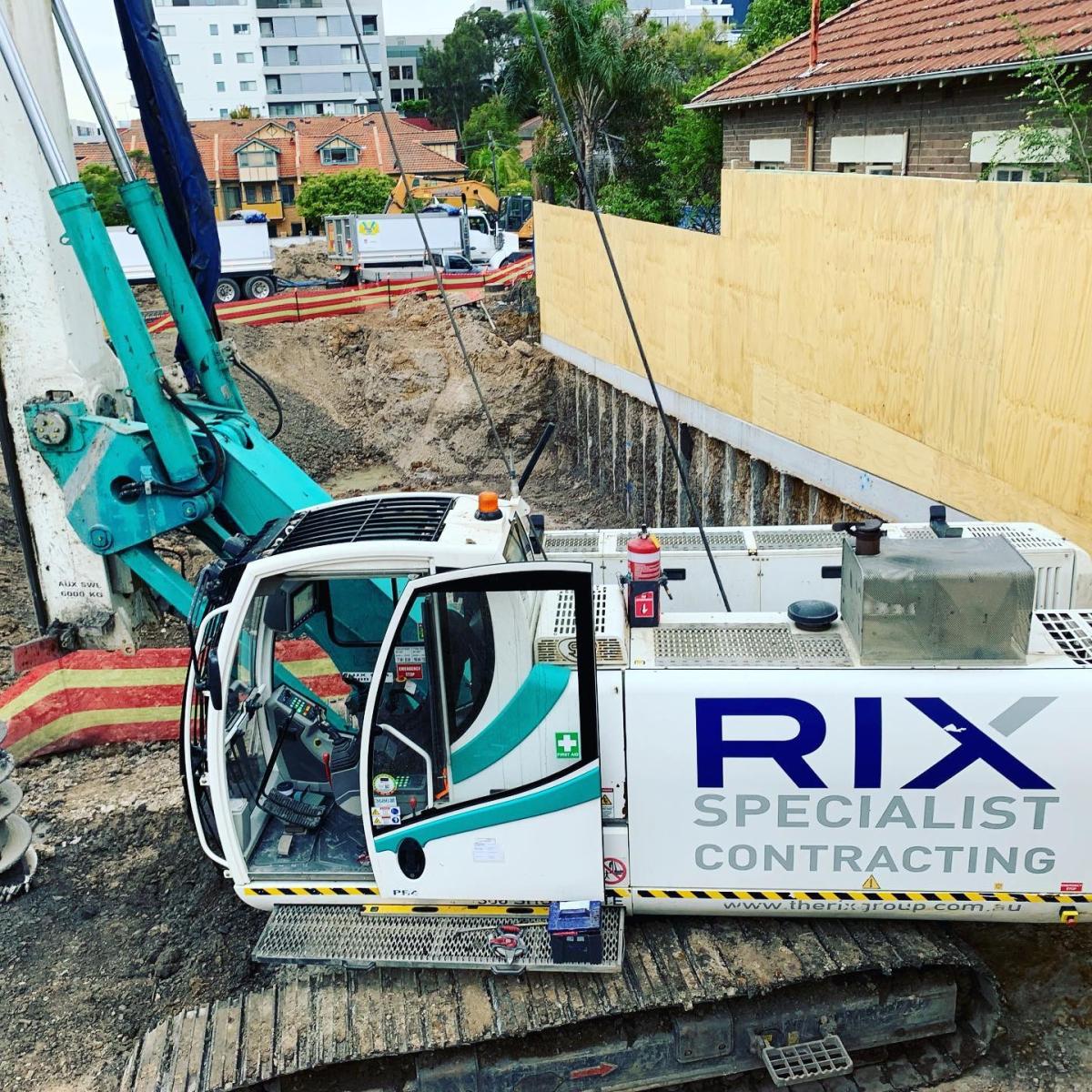
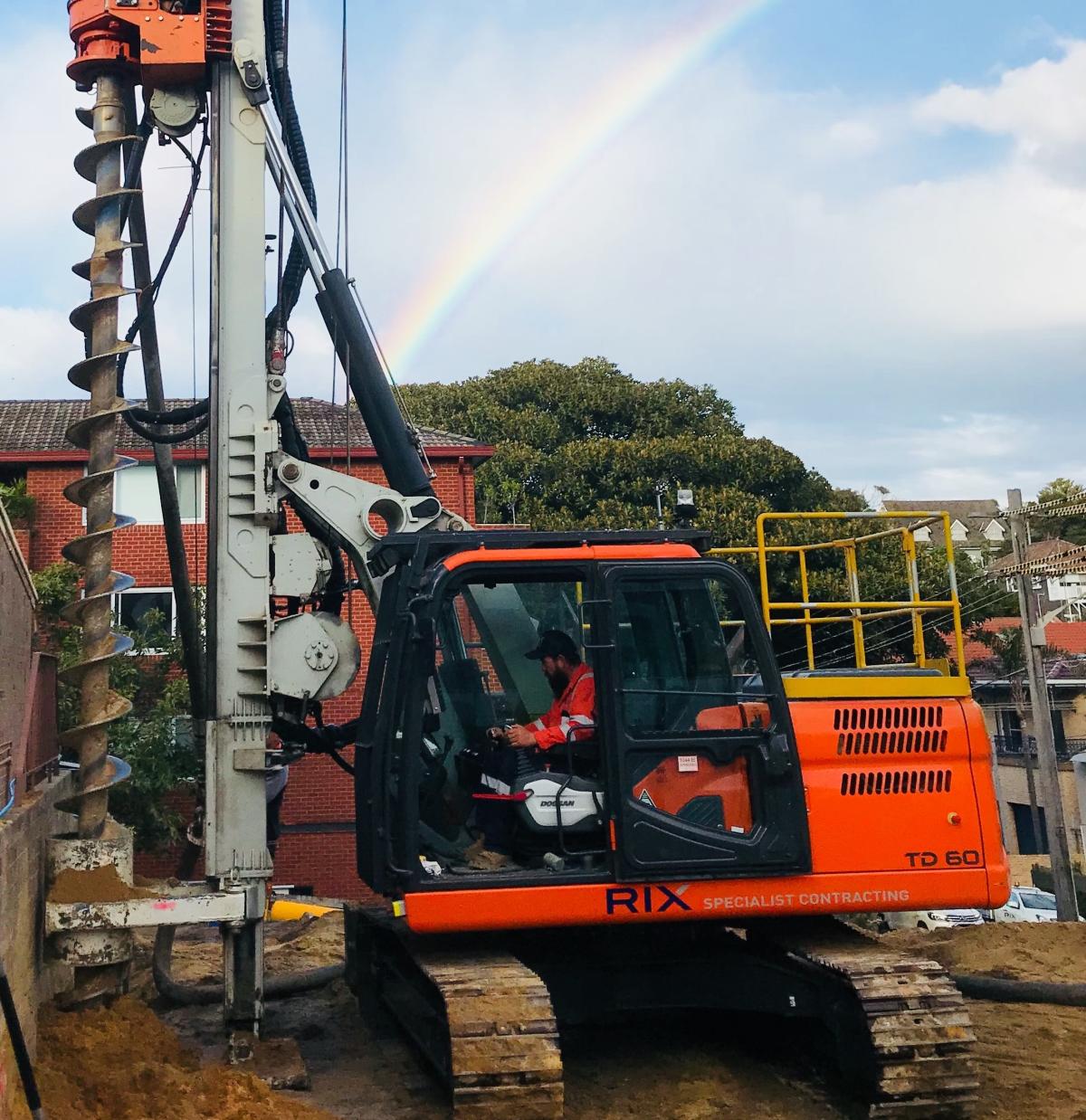
Whether building on a slope or in unstable soil, piles prevent your structure from settling, sinking and shifting over time. At The RIX Group, we offer comprehensive piling services for industrial, commercial and residential projects, including Design and Construct (D&C) piling, bored piles, cased piles, CFA piles, and secant and soldier piles.
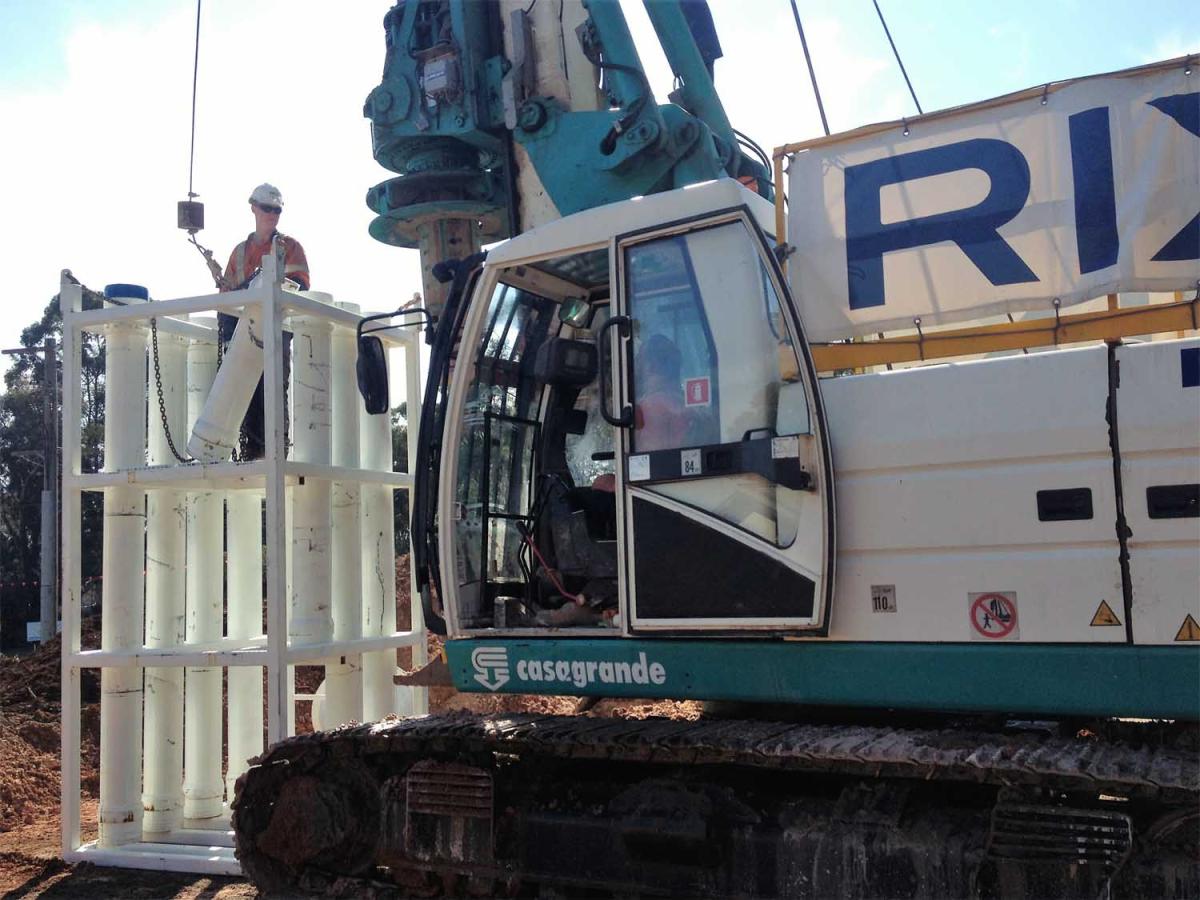
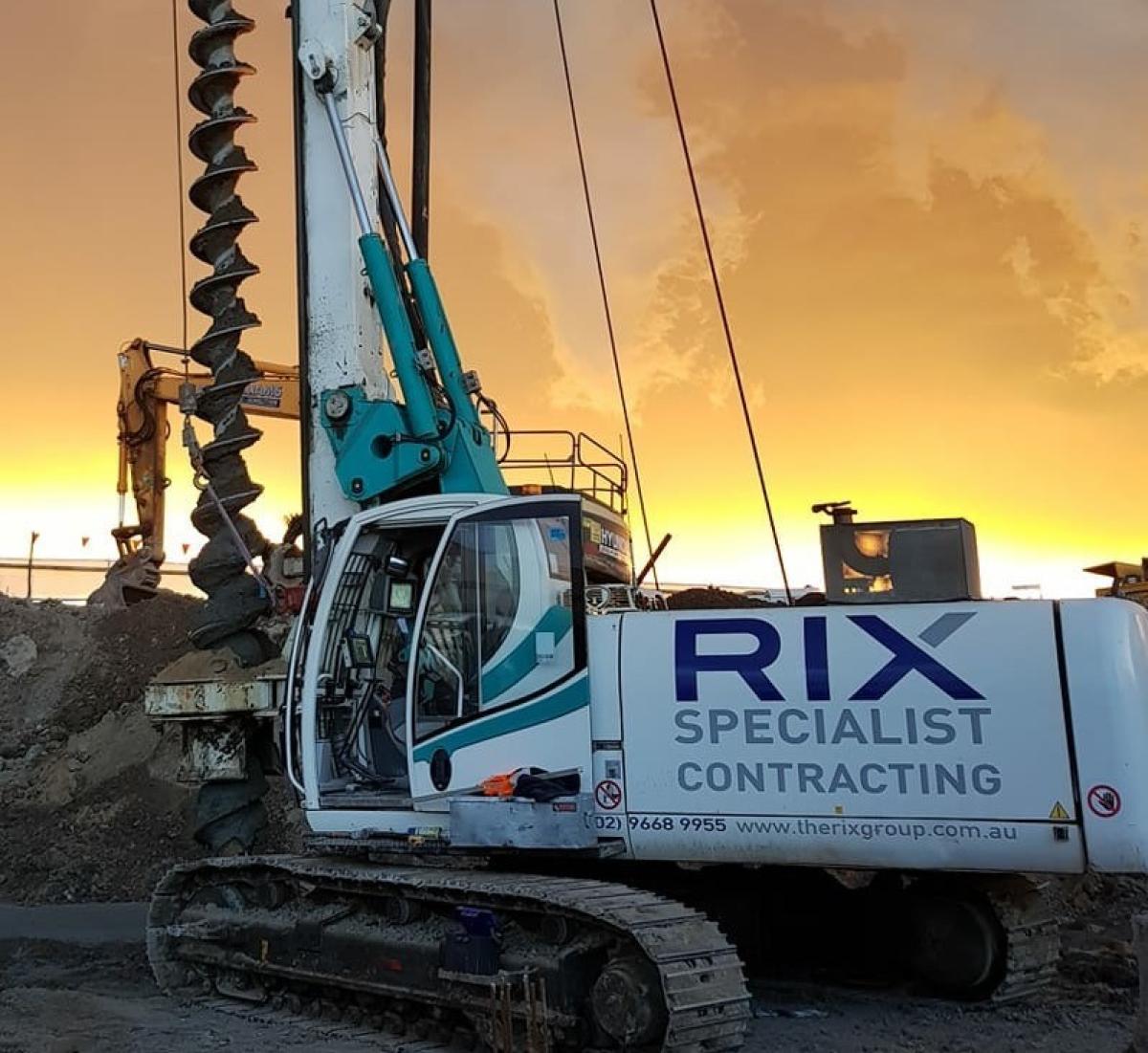
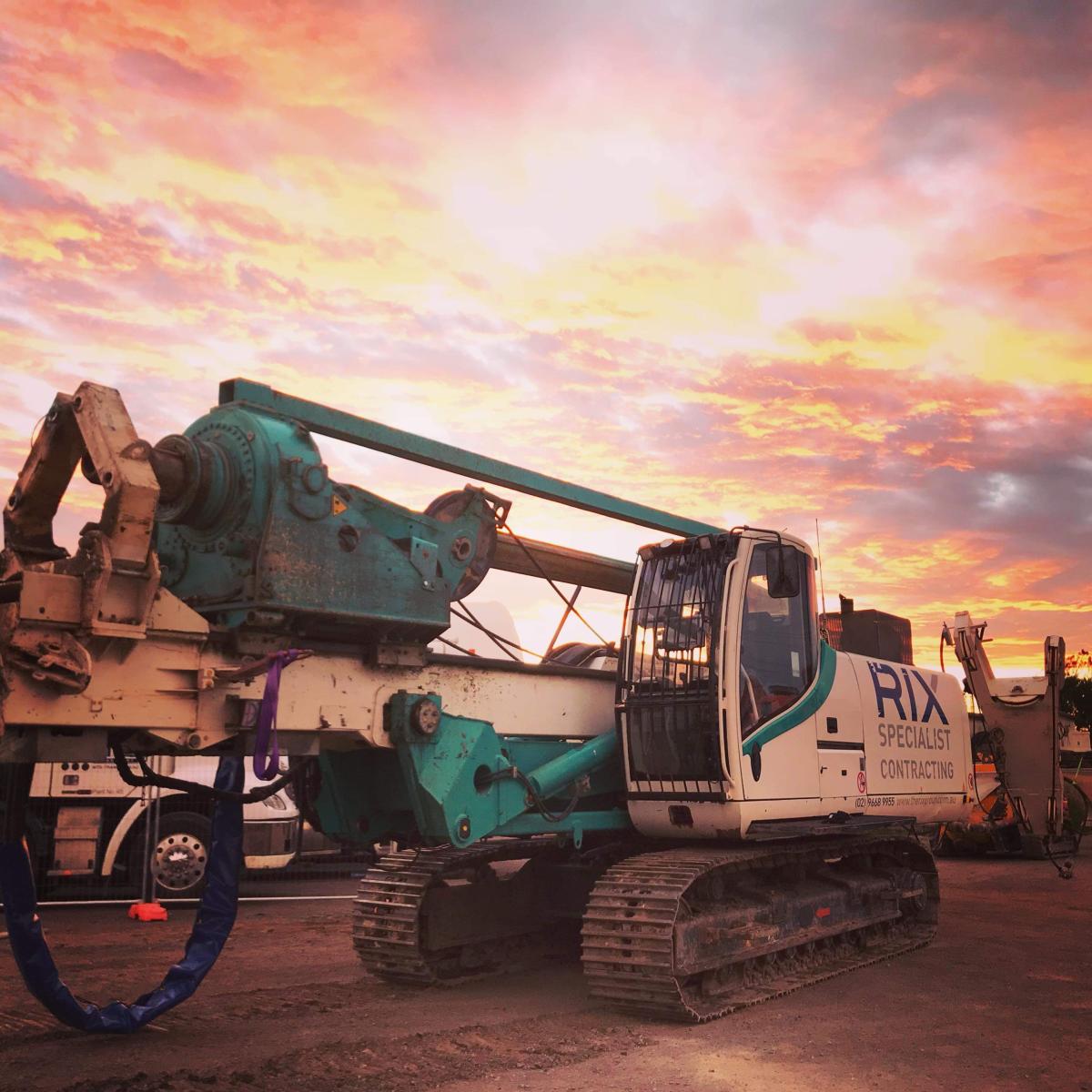
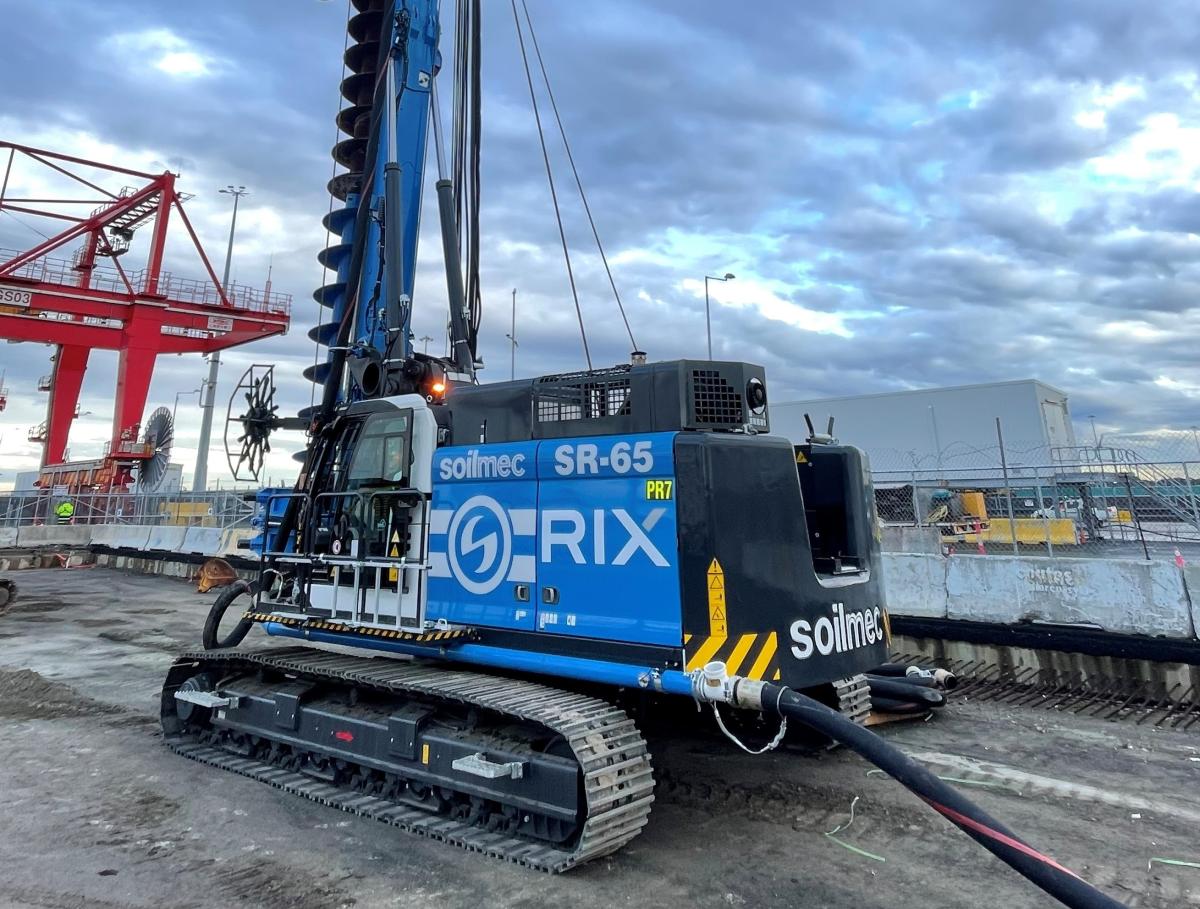
With decades of experience in ground stabilisation and retention, as well as a diverse fleet of piling rigs ranging from 7.5T to 120T, we’re equipped to deliver the most cost-effective piles for any site conditions.
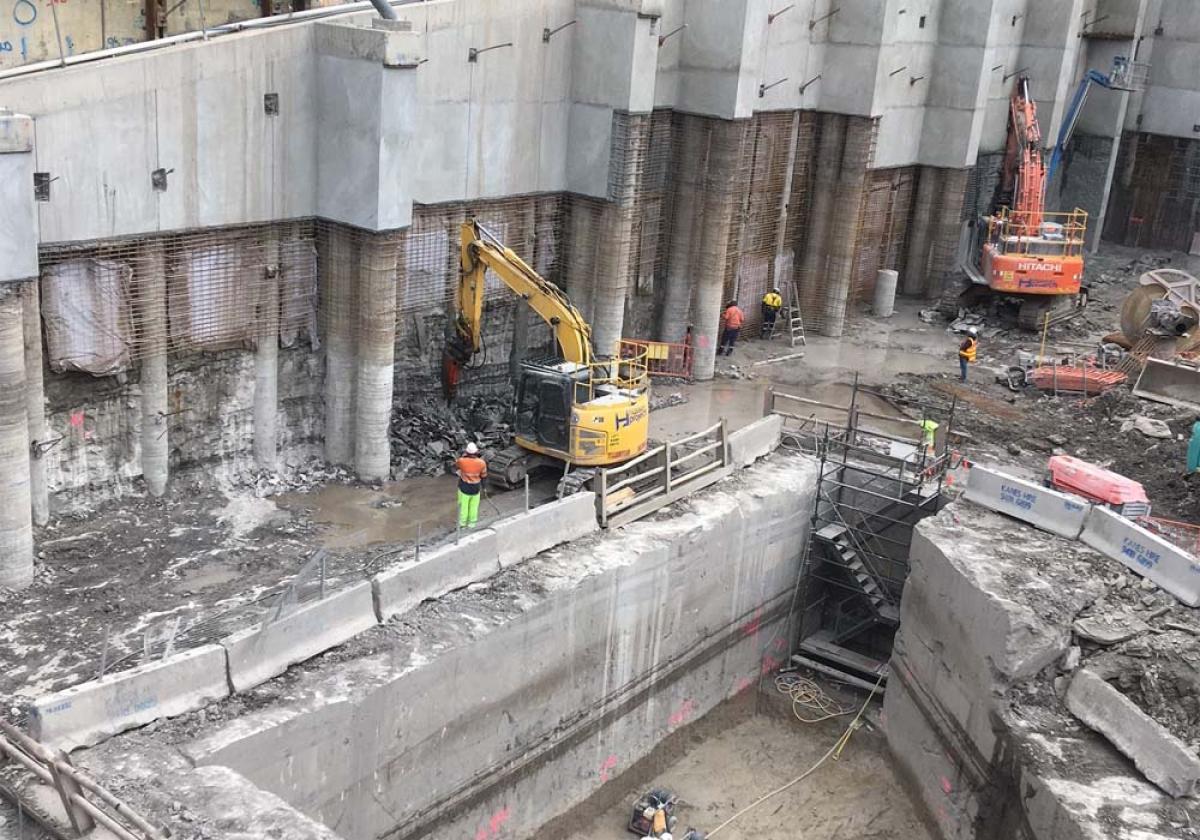
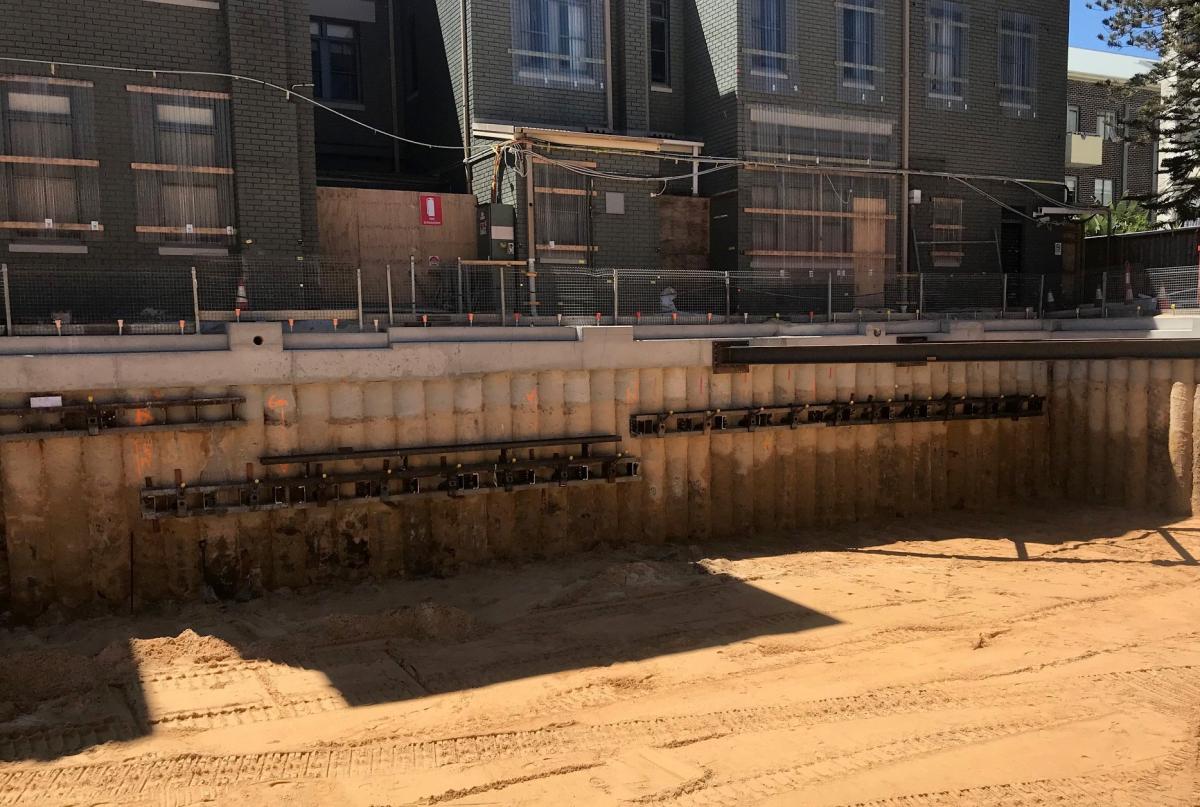
From design to installation, discover end-to-end shoring wall packages, including retention and structural piling, capping beam, anchoring and shotcrete.
Contact our piling contractors
Need a quote or do you have a general enquiry? Please complete our online form, and one of our team members will be in touch.
Our piling services include:
- D&C of shoring walls and foundation piles
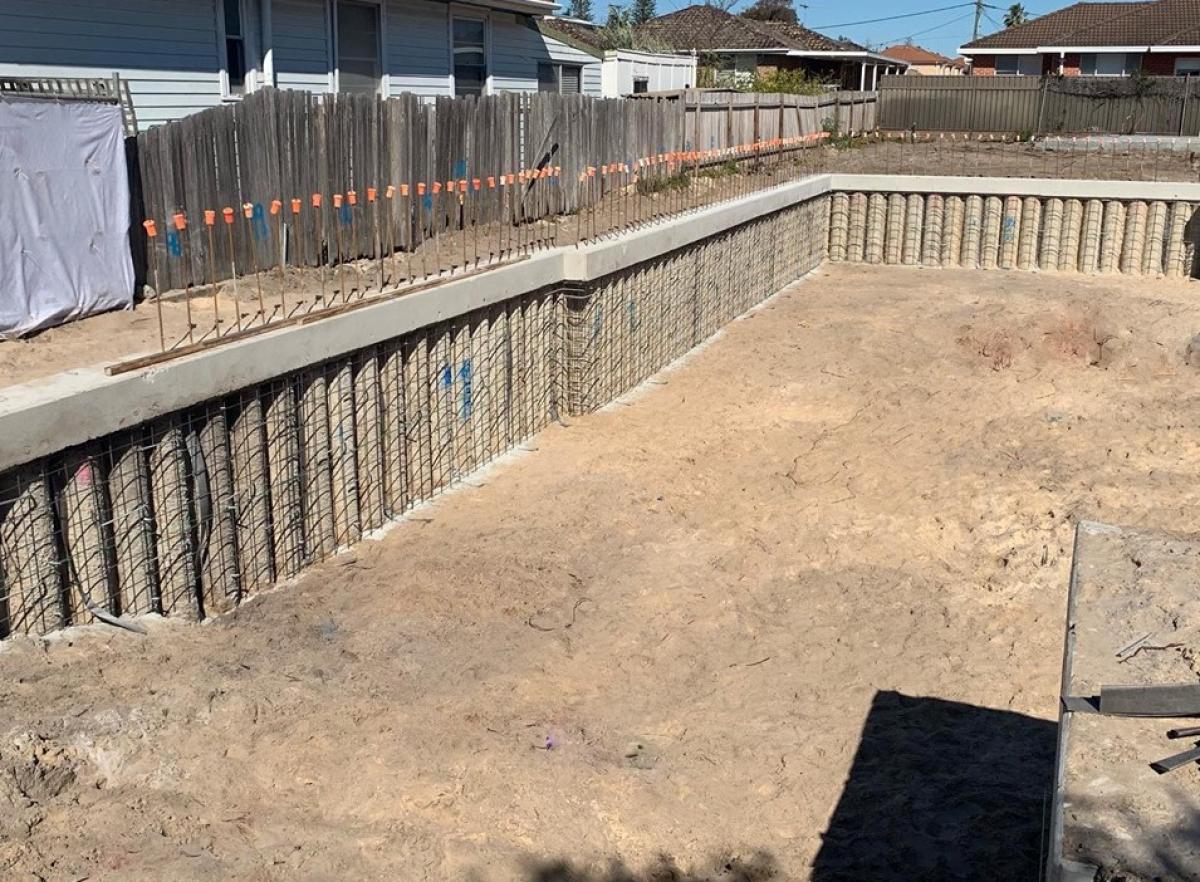
- Contiguous piled walls
- Pendulum drilling
- Pile testing for quality control
- RMS specification
- And more
Experts in all types of piling
Bored piles
Gain stability without disrupting the surrounding soil. Bored piles deliver high load capacity across rock, clay, and mixed soil conditions, making them one of the few methods suited to both difficult ground and deep foundation requirements.
Continuous Flight Auger (CFA) piles
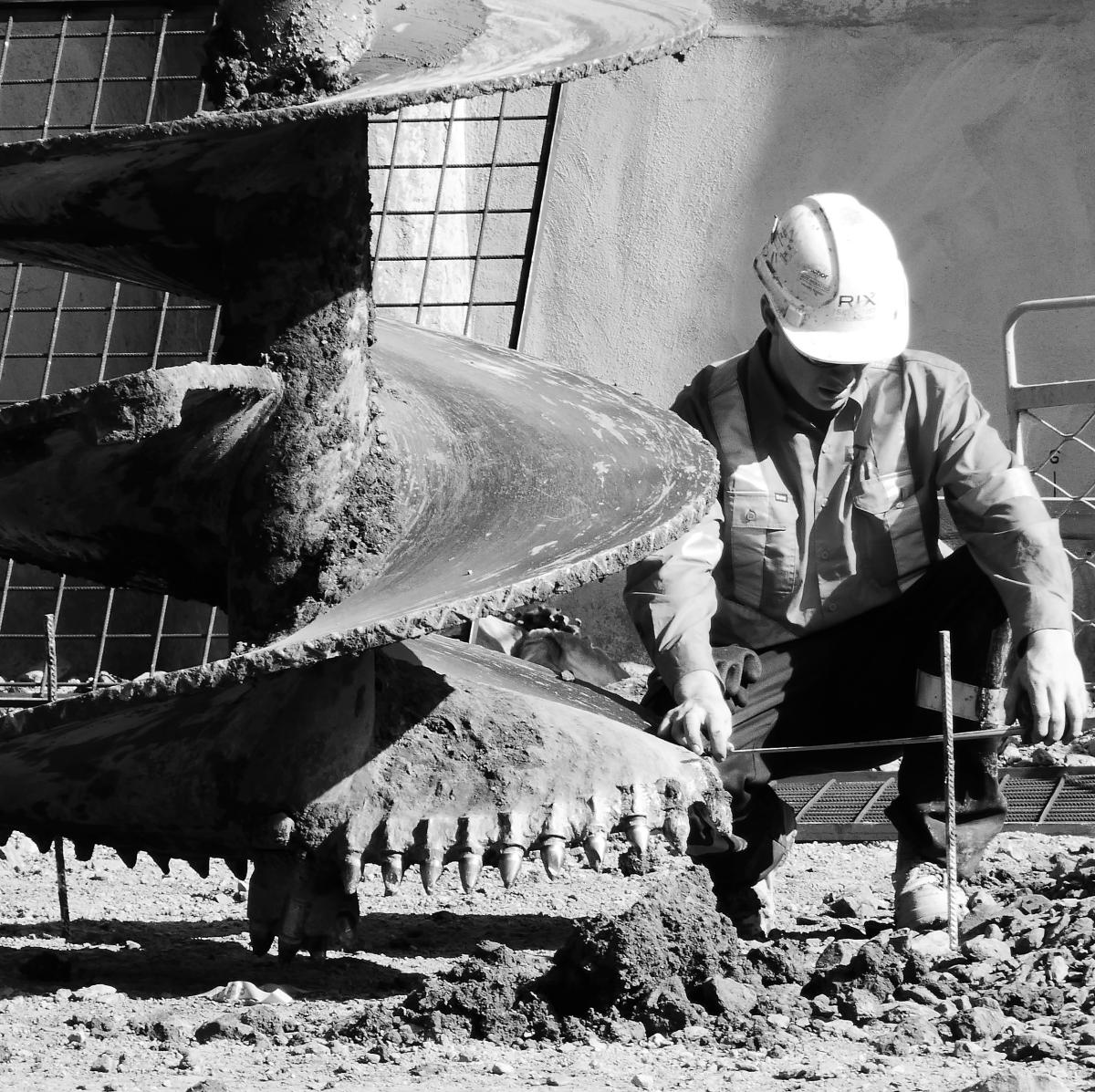
Minimise vibration and reduce the risk of soil or rock collapsing into the hole. Favoured for its efficiency, versatility and minimal vibration, CFA piling is a type of bored piling that drills to depth in a single pass using a hollow-stemmed continuous flight auger.
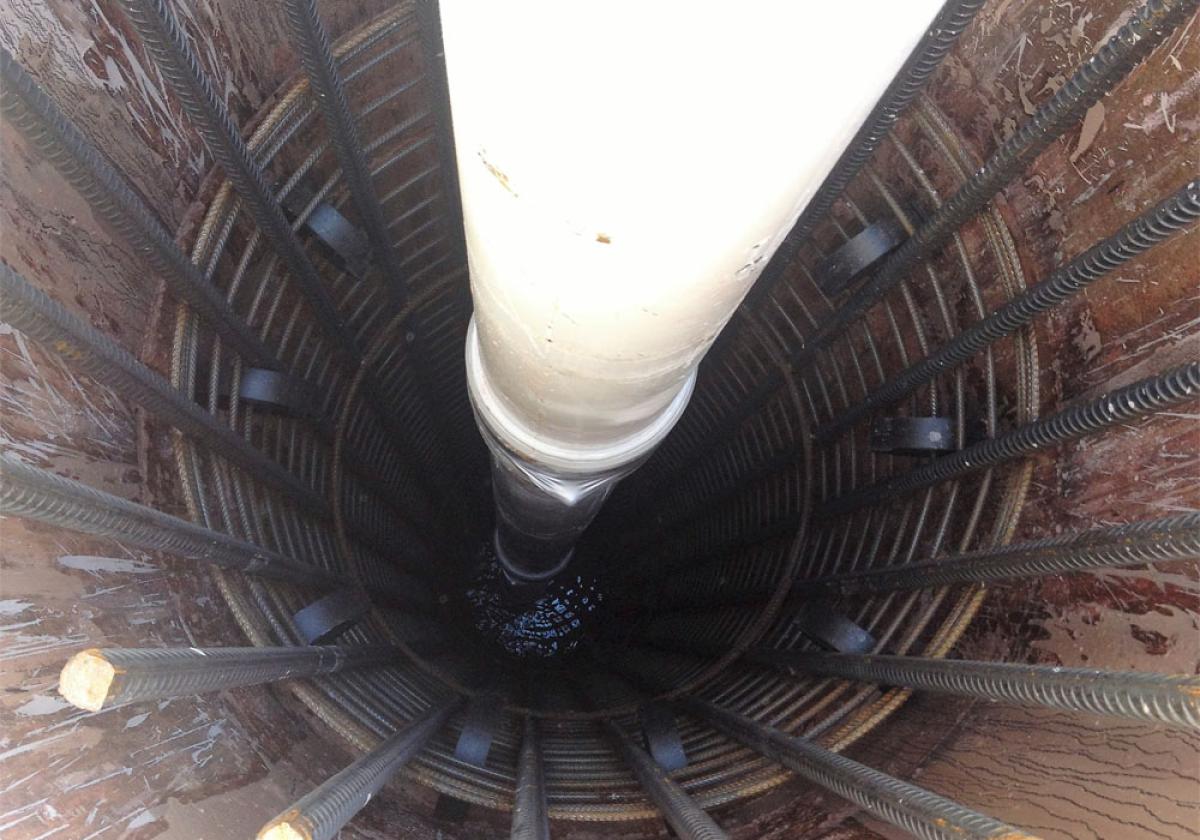
First, concrete is pumped through the auger as it withdraws, filling the hole from the bottom up. Next, a reinforcement cage is placed into the wet concrete to complete the pile. This permanent casing stays in the ground.
Micro piles
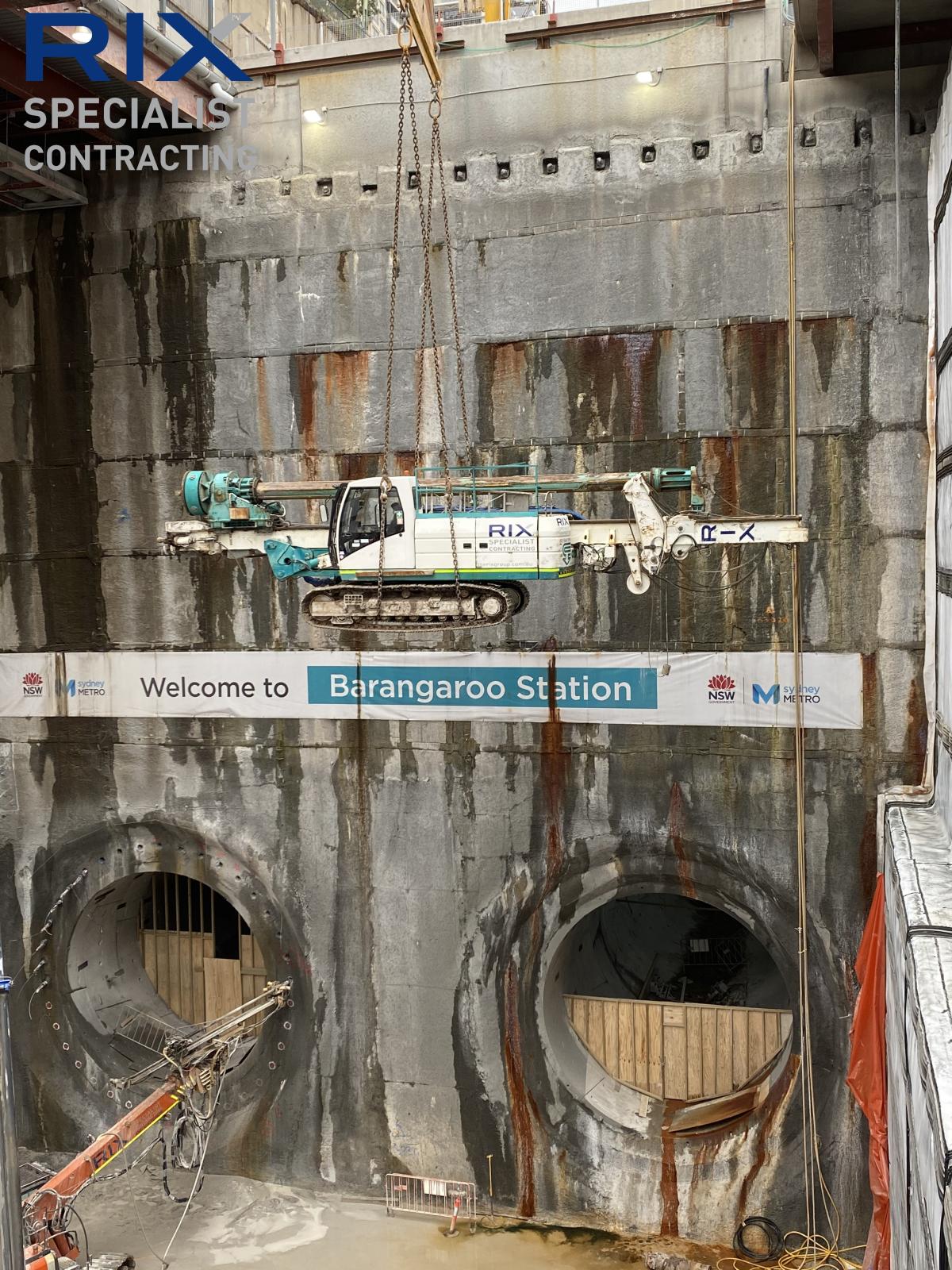
Install micro piling in restricted access sites, low headroom environments, and difficult ground conditions where standard rigs simply won’t fit.
Small diameter and high capacity, these piles are drilled and grouted into place using compact equipment. They carry significant structural loads despite their size and are regularly used to underpin existing foundations, work within live buildings, and adapt to variable subsurface conditions mid-project.
Secant piles
Tackle deep excavations in tight urban environments, basement construction, and sites where adjacent structures make vibration and ground movement a serious concern.
Secant piling builds a continuous retaining wall by constructing overlapping bored piles in sequence. Primary piles go in first. Secondary piles are then drilled to intersect them on both sides, creating an interlocked wall that holds back soil and groundwater.
Soldier piles
Secure a fast, cost-efficient retaining solution for excavations and time-sensitive construction projects.
Soldier piles are vertical steel or concrete piles installed at intervals, with horizontal lagging placed between them as the excavation advances. Ground anchors or props are added where the wall needs lateral support at greater depth. The retained height increases as digging progresses, providing unrivalled flexibility.
Driven piles
Often used for bridges, building foundations, and offshore structures, driven piles are fast to install and cost-effective at scale.
Precast concrete or steel piles are hammered, jacked, or vibrated into the ground until they reach a load-bearing stratum. This process compacts the surrounding soil along the pile’s full length, increasing bearing capacity as it goes.
Screw piles
Screw piling is minimally disruptive, quiet and fast to install, suiting sites with soft soils, lightweight structures, restricted access, and strict vibration requirements.
Steel shafts with helical plates are rotated into the ground using hydraulic equipment. That means no drilling, hammering, or concrete. The helices cut through soil and lock the pile in place at bearing depth, where it handles both compression and tension loads.
Learn More About Helical Screw Piles
Sheet piles
Discover durable structural support for deep excavations, basement construction, cofferdams, seawalls, and riverbank protection. Sheet piles can be designed as temporary works and extracted after construction, or left in place permanently.
Driven into the ground with vibratory or impact hammer equipment, interlocking steel sections form a continuous retaining wall or barrier against lateral soil and water pressure.
Restricted access piles
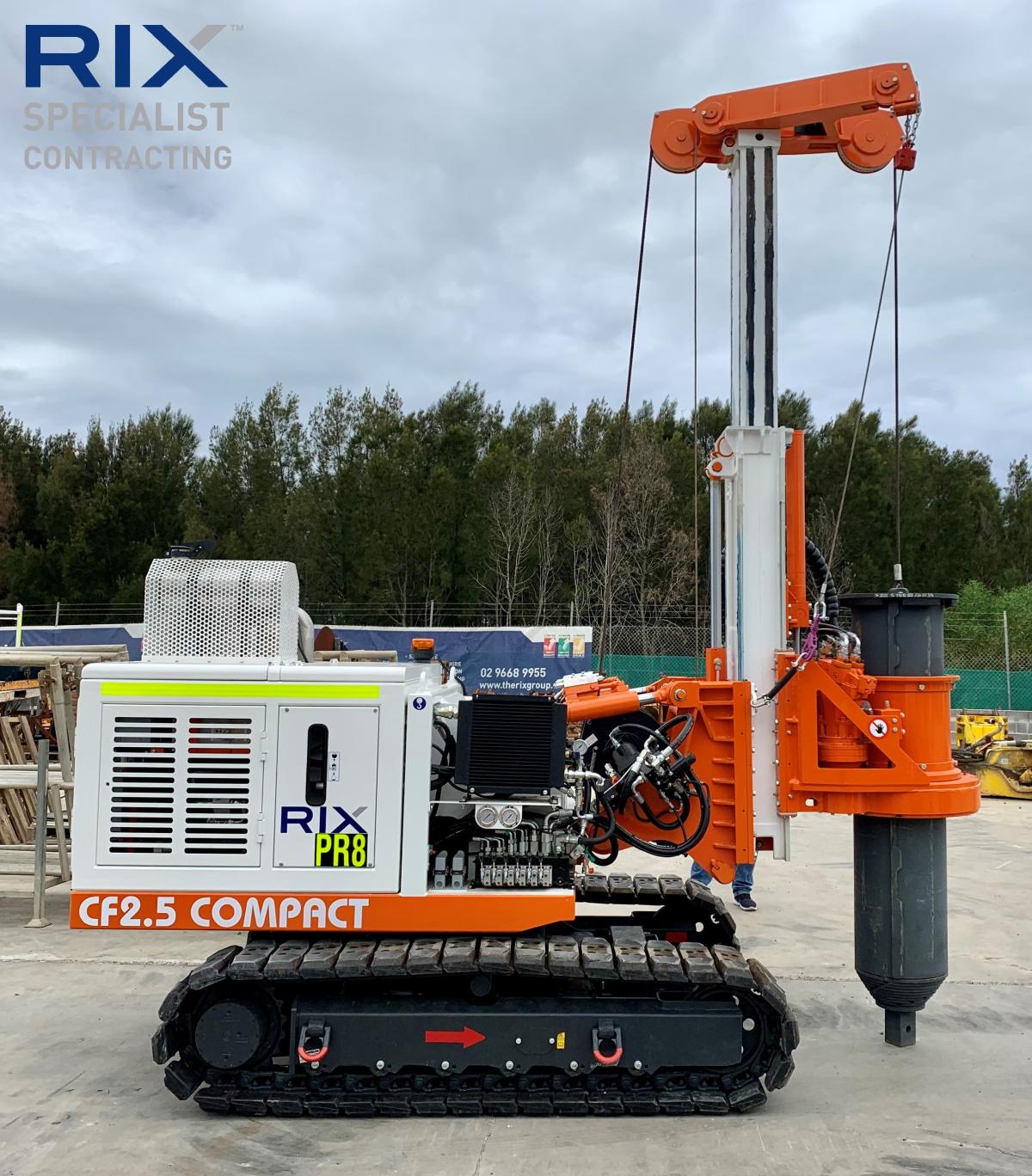
When space is tight, our restricted access piling delivers where conventional solutions can’t reach. Using compact rigs, we install piles in headroom as low as 2.45 m, making it an ideal solution for basements, bridges, tunnels, and heritage structures.
Micropiles are drilled vertically or at an angle through rock and rubble, carrying high loads with minimal noise and vibration. Keep disruption low, even in the most restricted and sensitive environments.
Streamline sub-structure works with D&C piling
1. Site survey and design
We start with a thorough geotechnical survey of the site. This establishes the soil profile, identifies weak or unstable layers, and determines the load requirements the piles must meet. From that data, our engineers pinpoint the right pile type, diameter, depth, and spacing to suit the structure and ground beneath it.
2. Installation
The piling rig is mobilised to your site, and installation begins. Each pile is installed to the specified depth, diameter, and load-bearing capacity confirmed in the design phase. While the exact method, materials, and equipment used may vary across piling types, the standard that every pile is held to does not.
3. Pile cap & load transfer
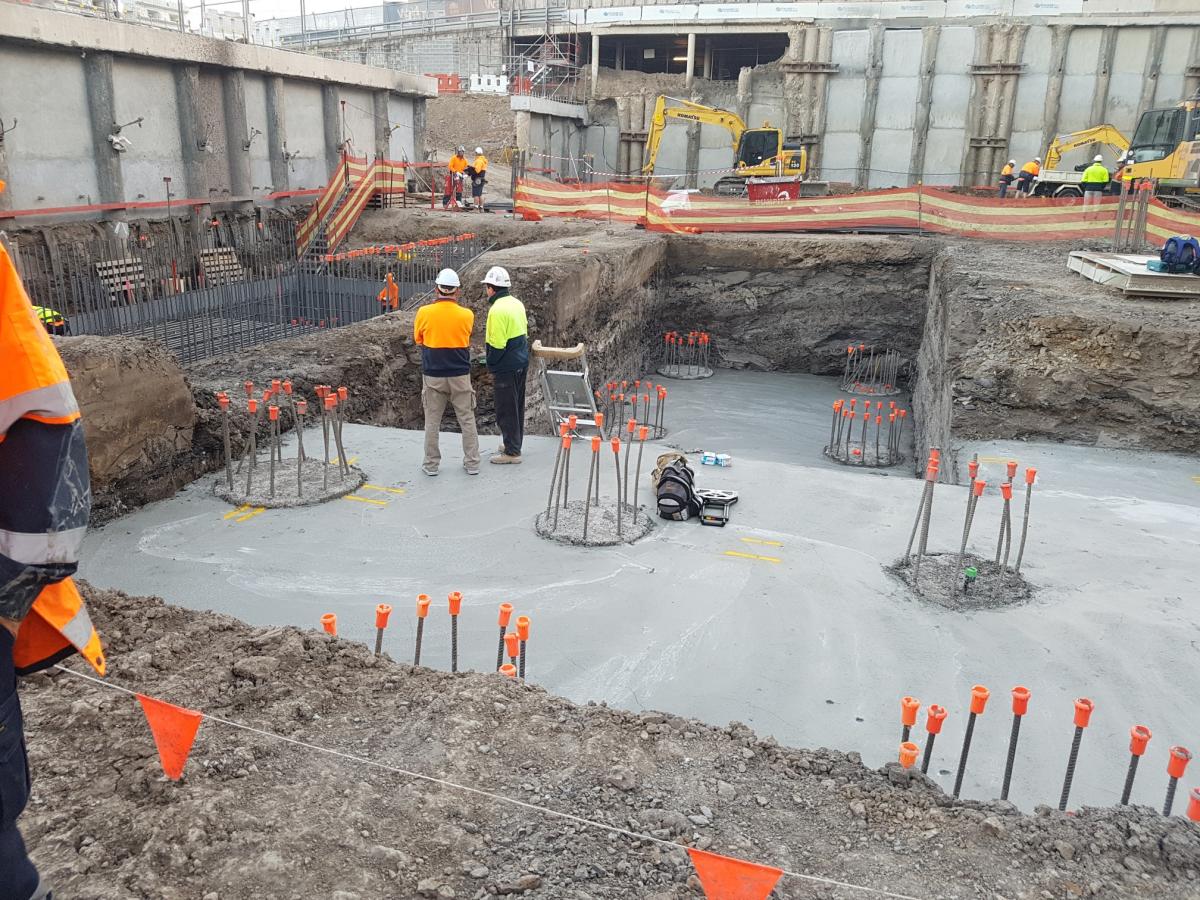
Once the piles are in place and cured, a reinforced concrete pile cap, slab, or beam system is constructed across the pile heads. This connects the piles to the structure above and distributes the load evenly across the foundation. From there, the piles do their job: carrying the structure’s weight down through the weak surface material to the stable soil or rock below.
FAQs
What is piling?
Piling is a deep foundation technique that transfers the load of a structure into the ground through long columns, which reach a stable layer of rock or firm soil. Whether beneath buildings, bridges, roads, ports, or renewable energy installations, these piles create solid foundations at construction sites where surface soil is soft, wet, or unstable.
Piling is a specialised field that demands skilled professionals and purpose-built equipment. To get started, contact our team today.
What are concrete pile foundations?
Concrete pile foundations are deep structural systems that transfer a building’s load through weak or compressible surface soil down to denser, more stable ground below. This prevents the structure above from sinking, tilting, or cracking over time.
Each foundation consists of multiple individual concrete piles, either pre-cast off-site or cast in place on the day.
Pre-cast concrete piles can be driven directly into the ground or placed into a pre-excavated hole, whereas in-situ concrete piles are cast on-site inside pre-drilled holes using reinforcement cages. Steel screw piles are another option for certain soil and load conditions.
Ultimately, the right system depends on the ground profile and the structural demands of each project.
What is the difference between precast and in-situ concrete piles?
The difference between precast and in-situ piles comes down to where and how the concrete is formed.
Precast concrete piles are manufactured off-site in a controlled environment, cast to fixed specifications, and cured before delivery. On-site, they’re driven into the ground using hydraulic or drop hammers until they reach the required bearing layer.
On the other hand, in-situ concrete piles are formed in the ground. A hole is bored to the required depth, a steel reinforcement cage is lowered in, and concrete is poured on site to create the pile.
Diameter and depth can be adjusted in response to what the ground reveals during drilling, which makes in-situ piling suitable for variable ground, constrained sites, and anywhere neighbouring structures make driving impractical.
The right choice depends on ground conditions, site constraints, load requirements, and programme. For tailored advice, contact The RIX Group.
When should piling be included in construction methods?
Piles should be used when the surface soil can’t safely bear the weight of a structure. Wet, clay-heavy ground is a common trigger: the top layers lack the load-bearing capacity needed, so piles bypass them entirely and carry the load down to bedrock or a firm soil stratum below.
Piling also tends to be recommended when structural loads are concentrated over a small footprint. High-rise buildings, major bridges, and large water tanks all generate substantial loads in a limited area. Shallow foundations cannot handle that concentration, making piling a practical solution.
What are the advantages of piling?
Steel or concrete piles offer several advantages over shallow foundation methods.
Firstly, piling creates a stable base in ground conditions where conventional foundations would fail, preventing settlement and structural damage over the life of a building.
As piles can be designed to specific load capacities, they adapt to a wide range of project requirements and can work alongside other foundation types where needed.
Installed piles also act as a buffer against ground-borne vibrations, absorbing energy before it reaches the structure or surrounding properties. This is crucial on sites near traffic, rail, or other sources of continuous movement.
From a project management perspective, piling is relatively fast to install, can proceed in most weather conditions, and minimises excavation compared to other deep foundation approaches. Less excavation means less disruption to the site and reduced material removal costs.
To experience these benefits for your next project, contact our team today.
Why is it important to calculate load-bearing capacity correctly?
Load-bearing capacity determines whether a pile foundation can safely carry a structure’s weight across its entire service life. Calculating this factor accurately is crucial for several reasons:
- Safety: Every pile system must be designed to handle ultimate loads: the worst-case forces the structure will ever place on the foundation. If the piles are undersized, the risk of failure is real.
- Compliance: In Australia, adherence to structural design codes is a legal requirement, and load-bearing calculations are central to meeting them.
- Cost efficiency: Miscalculating load-bearing capacity is expensive. Overdesign brings unnecessary spending on longer, wider piles than the structure needs, while underdesign can warrant a complete rebuild.
- Service ability: A foundation that passes ultimate load checks still needs to perform under everyday conditions across decades of use. Correct load-bearing design reduces long-term settlement, which, left unchecked, causes cracking in walls and floors, structural misalignment, and drainage failures that compound over time.
- Soil interaction: Piles must reach a stratum capable of bearing the load transferred through them. If the bearing layer is misjudged and a pile is driven into weaker ground below it, the pile pushes through the soil instead of bearing on it.
At The RIX Group, our engineers carry out rigorous geotechnical analysis and structural calculations on every project to ensure the foundation design is precise, compliant, and built to perform for the life of the structure.
How does D&C piling work?
D&C piling, or Design and Construct piling, means one contractor owns the entire process, from engineering design to the physical installation. There is one contract, one point of accountability, and no gaps between what was designed and what gets built.
In a traditional model, a structural engineer designs the foundation system and hands it to a contractor to execute. If something doesn’t translate from drawing to ground, the client needs to manage the fallout between two separate parties.
D&C eliminates this risk. The contractor who designs the solution is the same team driving piles into the ground.
At The RIX Group, we deliver D&C piling across Australia, taking construction projects from ground investigation and foundation design through to completed installation.
How much does piling cost?
Piling costs in Australia vary depending on key factors such as:
- Method: Screw, driven, bored and other types of piles each carry different price points based on the equipment involved and the load capacity required.
- Site accessibility: Restricted or difficult-to-reach sites require specialised equipment, which adds to the overall cost.
- Soil type and conditions: High water tables, rocky ground, gravel, sand, and soft soil all increase labour time and material use, pushing costs up.
- Pile depth and quantity: Deeper piles and larger numbers of them are necessary for heavy or complex structures, and the cost scales accordingly.
For an accurate quote tailored to your site, project and budget, contact The RIX Group directly.
Do you provide piling services throughout Australia?
Yes. Our experienced piling contractors work across Australia, from Sydney to Perth and everywhere in between. Contact us to discuss your project requirements and arrange services for your site.
Contact The RIX Group
Need a quote or do you have a general enquiry? Please complete our online form and one of our team members will be in touch.