Ground, Soil & Rock Anchors
Overview
Ground Anchoring Solutions For Difficult And Limited-Access Areas
Improve site safety and structural stability. By transferring loads into suitable soil or rock layers, ground anchors help secure retaining walls, support temporary excavations, stabilise slopes and strengthen foundations where movement risk needs to be controlled.
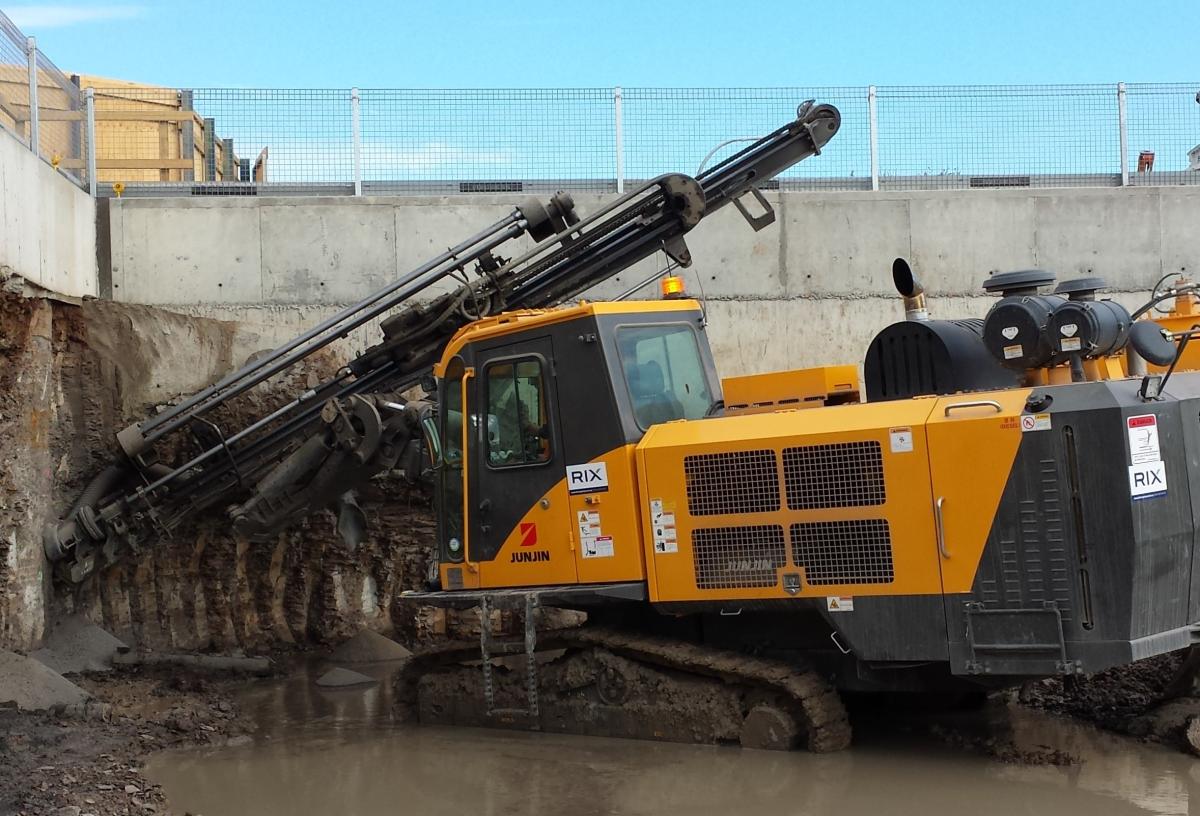
At The RIX Group, we deliver ground, soil and rock anchors for the most demanding sites throughout Australia and the Asia Pacific. Utilising advanced plant and equipment, our passionate team delivers each solution to the highest specifications and in accordance with Australian Standards. Discover end-to-end design and installation, including complete Shoring Wall Packages.
Contact Our Ground Anchor Experts
Our Drilling And Ground Anchoring Services
- Permanent ground anchors
- Temporary and removable ground anchors
- Sand anchors
- Soil nails and rock bolts
- Walers and bracing
- Brow bolts
- Canopy tubes
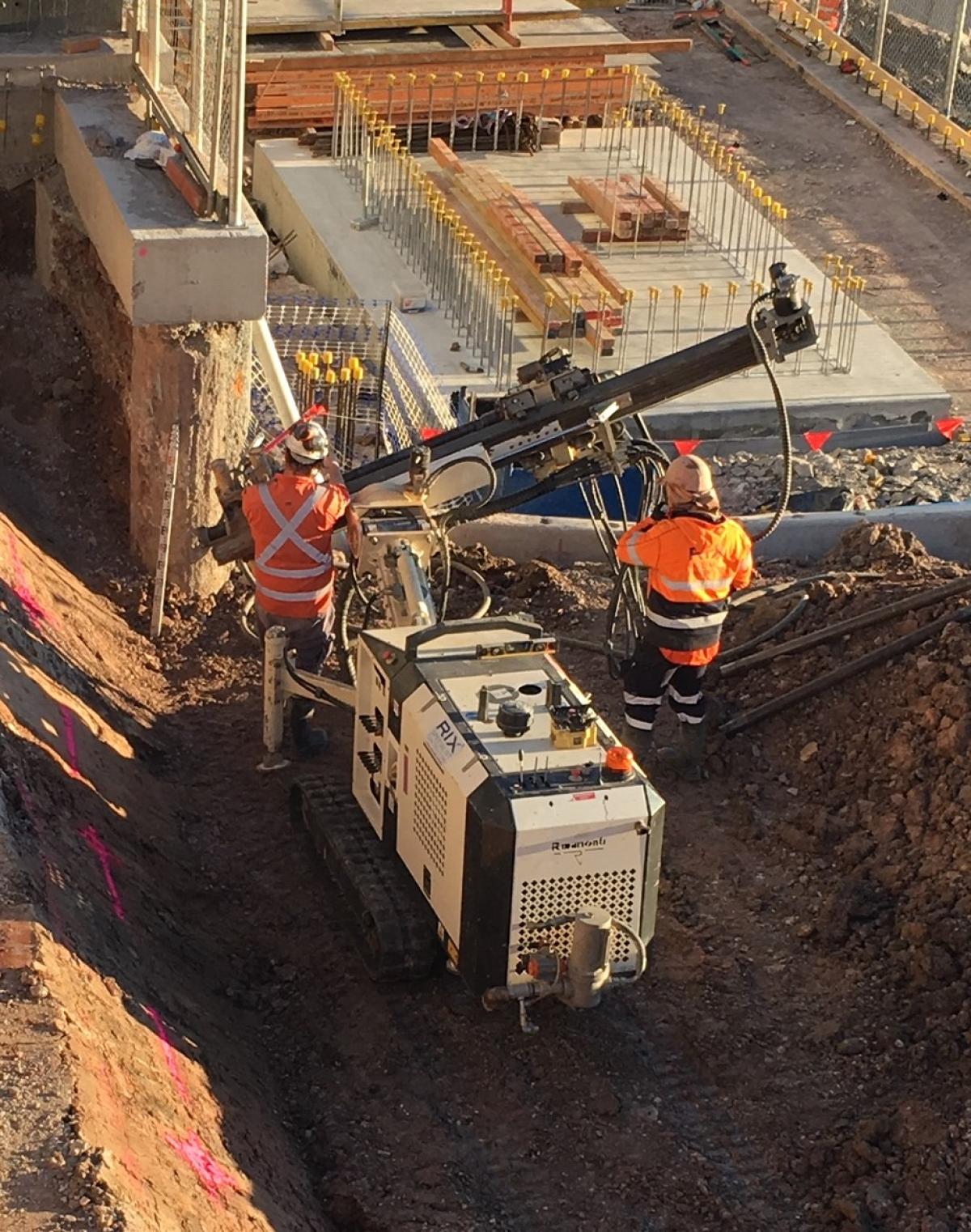
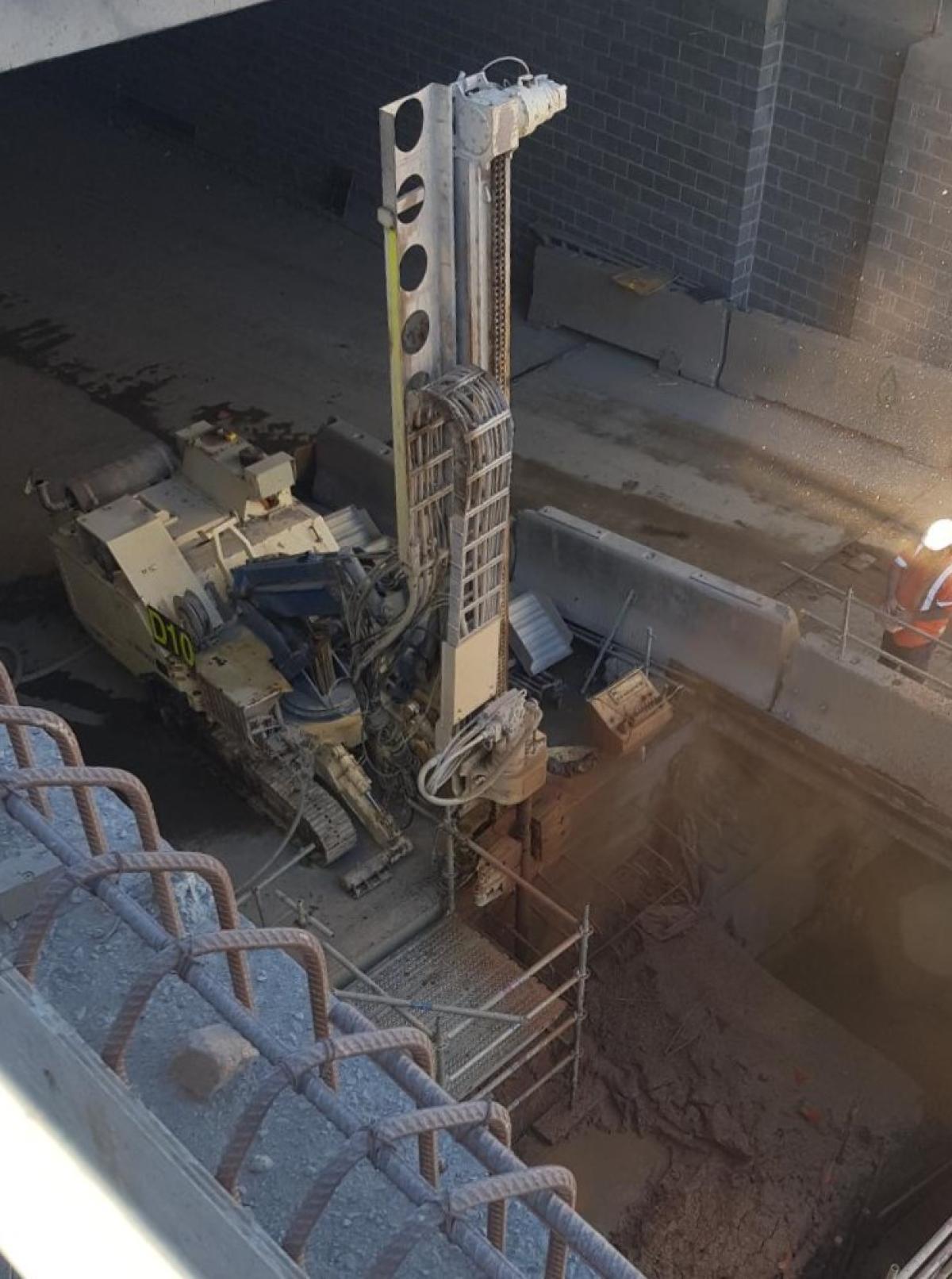
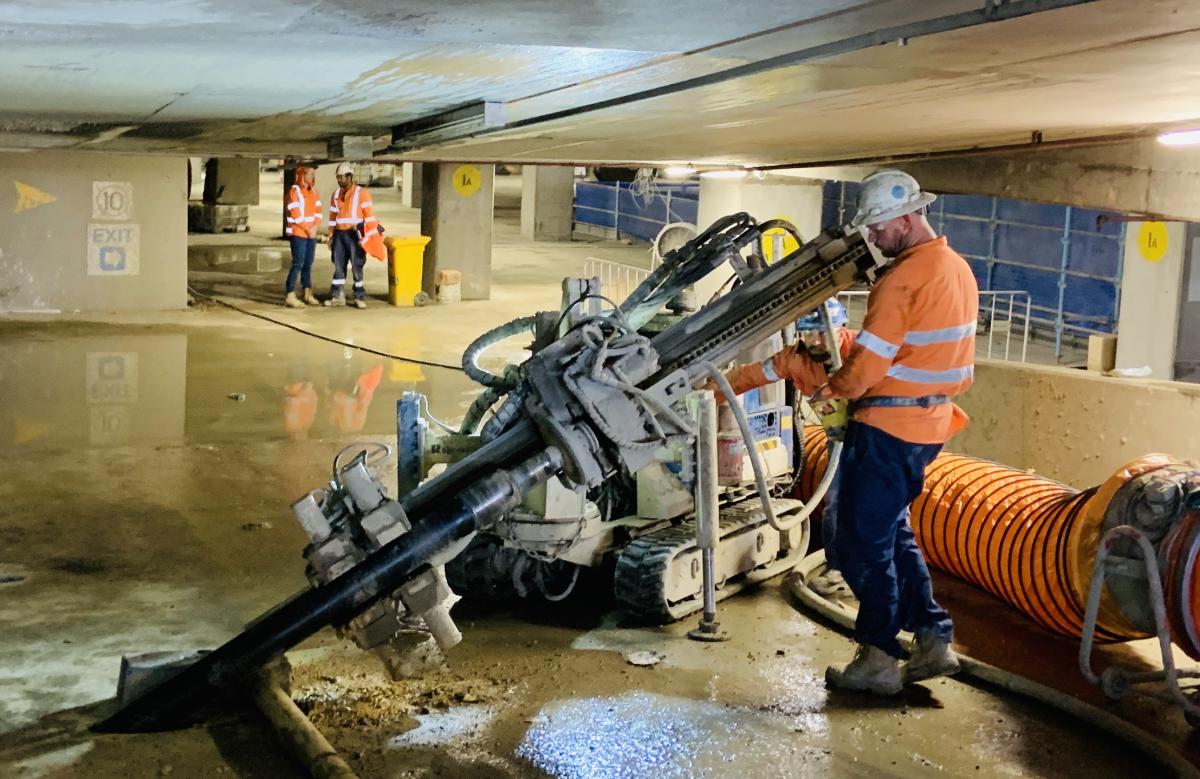
- Restricted access anchoring
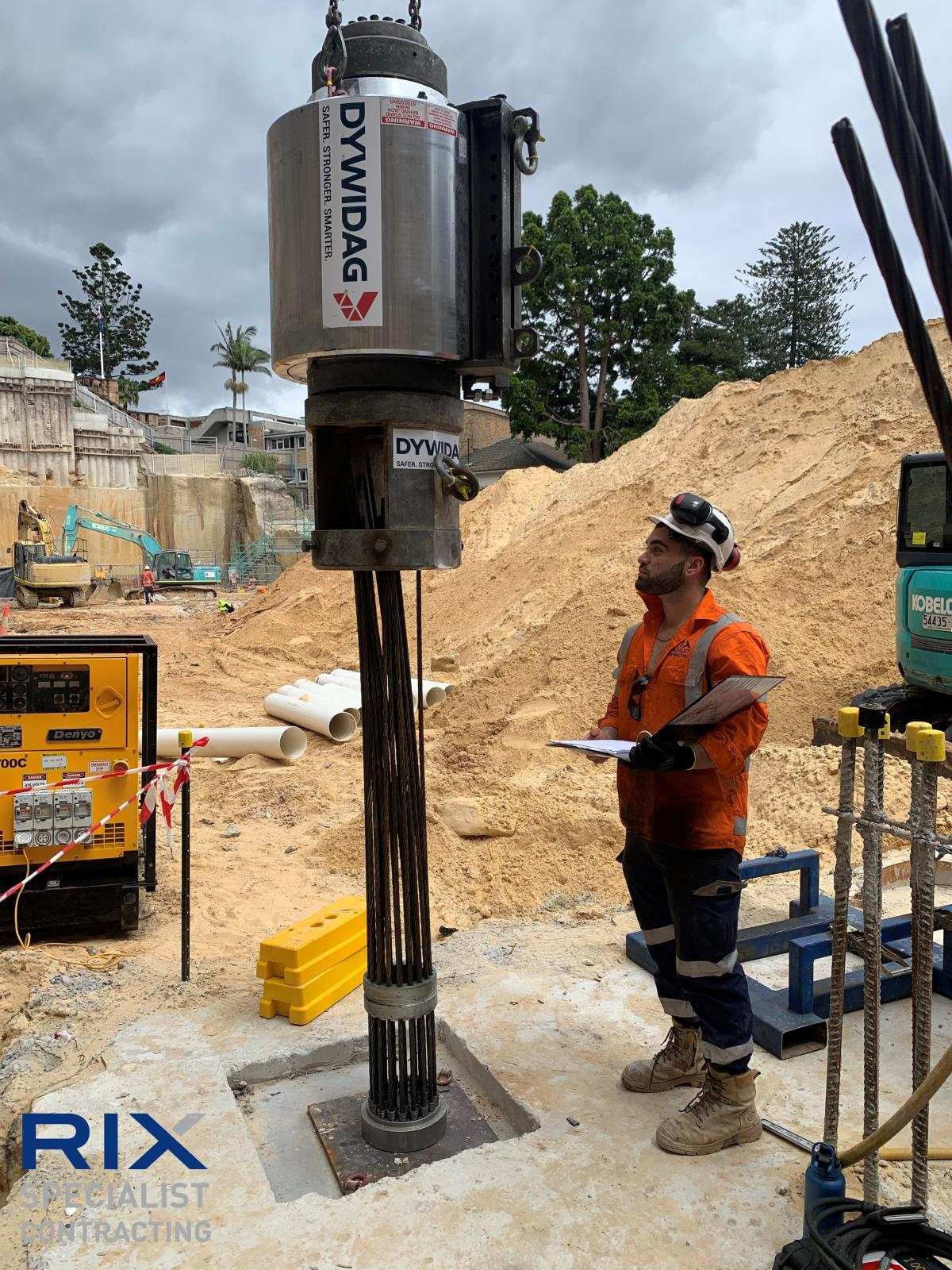
- Anchor stressing and testing
Rock Anchors For Reliable Structural Support
Keep critical assets safe, stable, and secure. When a structure needs to resist uplift, sliding, overturning or lateral movement, rock anchors provide high-capacity support by transferring load into competent rock.
From sea walls and retaining walls to dams and bridge abutments, we supply rock anchors for projects where precision and performance are paramount.
Each temporary or permanent anchor is selected to suit the site’s ground conditions, structural loads, access constraints and required design life. With options including threaded bar anchors and multi-strand tendon systems, you can minimise movement risk and improve structural integrity.
Stabilise Ground Conditions With Soil Anchors
Support stability in diverse ground conditions. Soil anchors transfer loads into clays, silts, sands, gravels, and weathered rock, where the strata can achieve the required bond capacity.
At The RIX Group, we design and install durable soil anchors for retaining walls, excavations, slopes and foundations. Softer or more variable soils may require longer bond lengths, temporary casing, controlled drilling or post-grouting to achieve the required capacity.
Whatever the site demands, our team has the expertise and equipment to turn suitable soil strata into dependable ground support.
Reduce The Risk Of Rockfalls
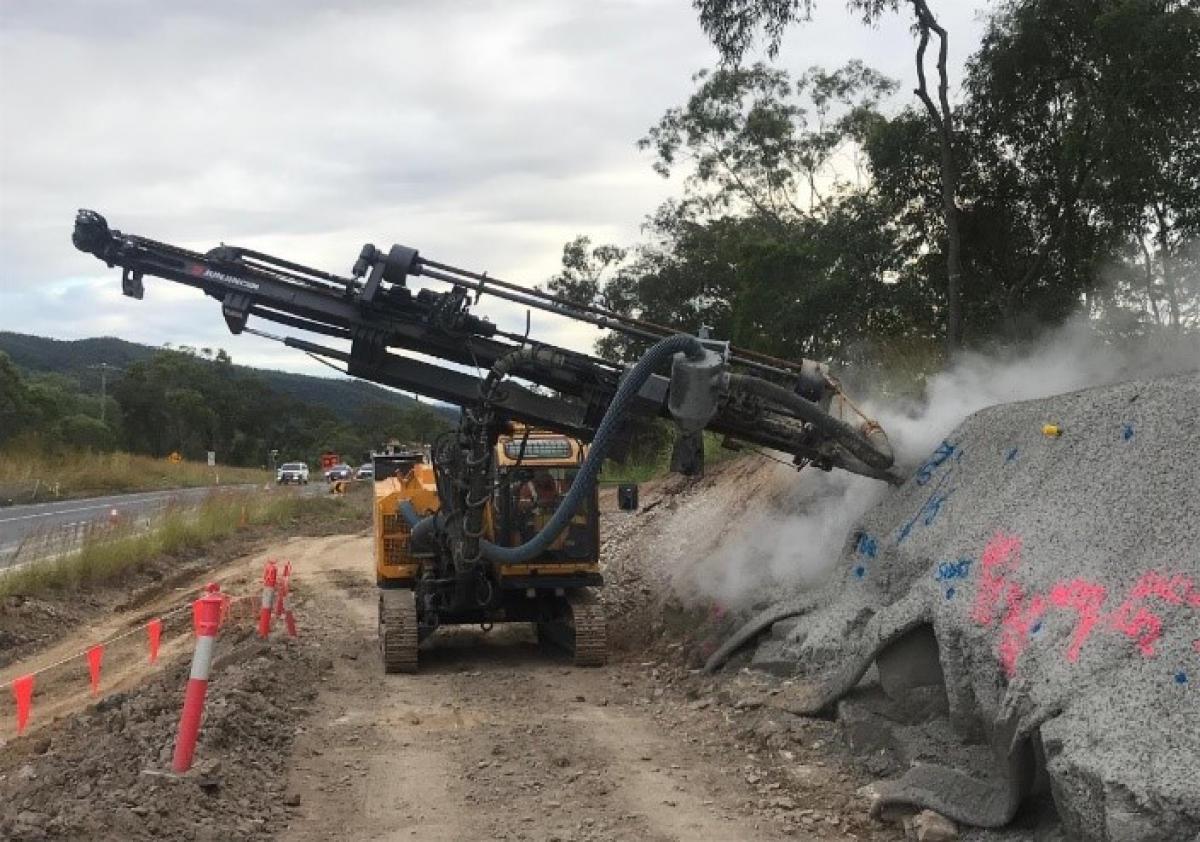
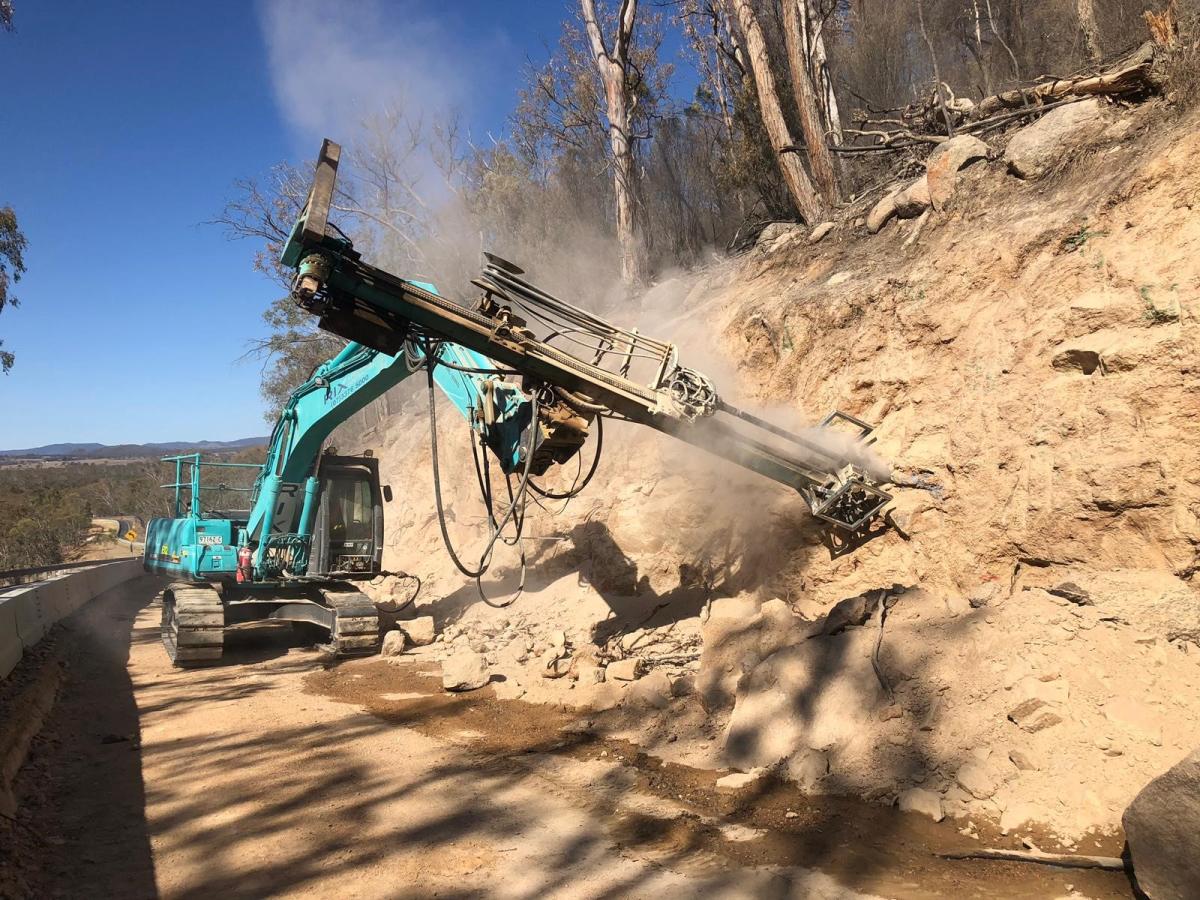
Protect workers, plant and access zones from the dangers of fractured or unstable rock. Our team installs rock bolts to stabilise exposed rock faces, support excavation works and support safety on challenging sites.
Rock bolts are inserted into pre-drilled holes and fixed with grout, resin or mechanical anchorage. Where required, they are tensioned to add restraint across fractures and loose blocks, helping to bind unstable rock back into the stronger parent rock mass.
Whether your project involves tunnels, underground excavations, mining operations or slope stabilisation, install targeted reinforcement with The RIX Group.
Partner With Our Ground Anchor Specialists
End-to-end expertise
Install ground anchors without the cost, delays, or risk of subcontracting. Backed by Australia’s largest fleet of owned plant and equipment, an in-house fabrication facility, and a strategic partnership with Ghella Group, we deliver integrated solutions to the highest standard.
Proven capability
Be confident in the safety, performance and durability of your ground anchors. We harness decades of combined experience throughout Australia and the Asia Pacific. Every anchor is supported by strict quality control, expert technical design, and operations optimised over 40 years on the ground.
Tailored solutions
Meet project requirements with unrivalled accuracy and efficiency. From design and drilling to testing and locking off, we customise every ground, soil and rock anchoring solution to meet your needs on schedule and within budget.
FAQs
What is the difference between permanent and temporary ground or rock anchors?
Permanent and temporary ground anchors differ by their design life, structural role and corrosion protection requirements.
Permanent ground anchors are designed to remain in service for the life of the structure. They require higher-grade corrosion protection to maintain long-term load capacity and performance in changing ground conditions.
In contrast, temporary ground anchors deliver short-term support during construction, typically for up to two years. They are often used for excavation support, shoring, temporary retaining systems and staged works.
Removable ground anchors are a type of temporary anchor. They provide short-term support during construction, then allow the strands to be removed once the anchor is no longer required. This can suit projects near boundaries, future services or areas where permanently buried strands are not suitable.
What applications are ground and rock anchors used for?
Ground and rock anchors are used to stabilise ground, retain structures and transfer loads into stronger soil or rock. Typical anchor applications include:
- Retaining walls: Supporting permanent and temporary retaining walls in basements, road corridors, rail cuttings and urban construction sites.
- Deep excavations: Holding excavation walls in place during basement construction, tunnelling, piling works and staged earthworks.
- Slope stabilisation: Reducing the risk of slope movement, landslips, erosion and road slumping in steep or unstable ground.
- Bridge and transport infrastructure: Strengthening bridge abutments, underpasses, road cuttings, rail corridors and embankments exposed to lateral or vertical forces.
- Foundation strengthening: Improving the stability of pylons, towers, high-rise buildings and other structures with high load demands.
- Marine and flood defence works: Securing sea walls, quay walls, levee banks, mooring structures, sluices and other assets exposed to water pressure or changing ground conditions.
- Dams, reservoirs and underground structures: Resisting uplift, water pressure and ground movement in large-scale infrastructure projects, tunnels and underground works.
How does a rock anchor work?
A rock anchor transfers load from a structure into a stable rock mass behind or below it. A hole is drilled into the rock, a steel tendon is installed, and grout bonds part of the anchor to the surrounding rock. Once tensioned, the anchor helps resist movement, uplift or lateral pressure.
This system has three main load-transfer zones:
- Tendon: The main steel element, usually a high-strength bar, strand or cable. It carries the tensile load from the structure into the anchor system.
- Free length: The unbonded section of the tendon. This length can stretch under tension, allowing the anchor to be stressed and the load to be controlled.
- Bond length: The grouted section that is fixed into competent rock. This is where the load transfers from the tendon into the rock through the grout bond.
Together, these components allow the rock anchor to hold retaining walls, slopes, foundations and other structures in place.
How are rock anchors installed?
Rock anchors are installed through a controlled drilling, tendon installation, grouting, testing and stressing process.
While the exact method depends on the anchor design, ground conditions and project specification, typical steps include:
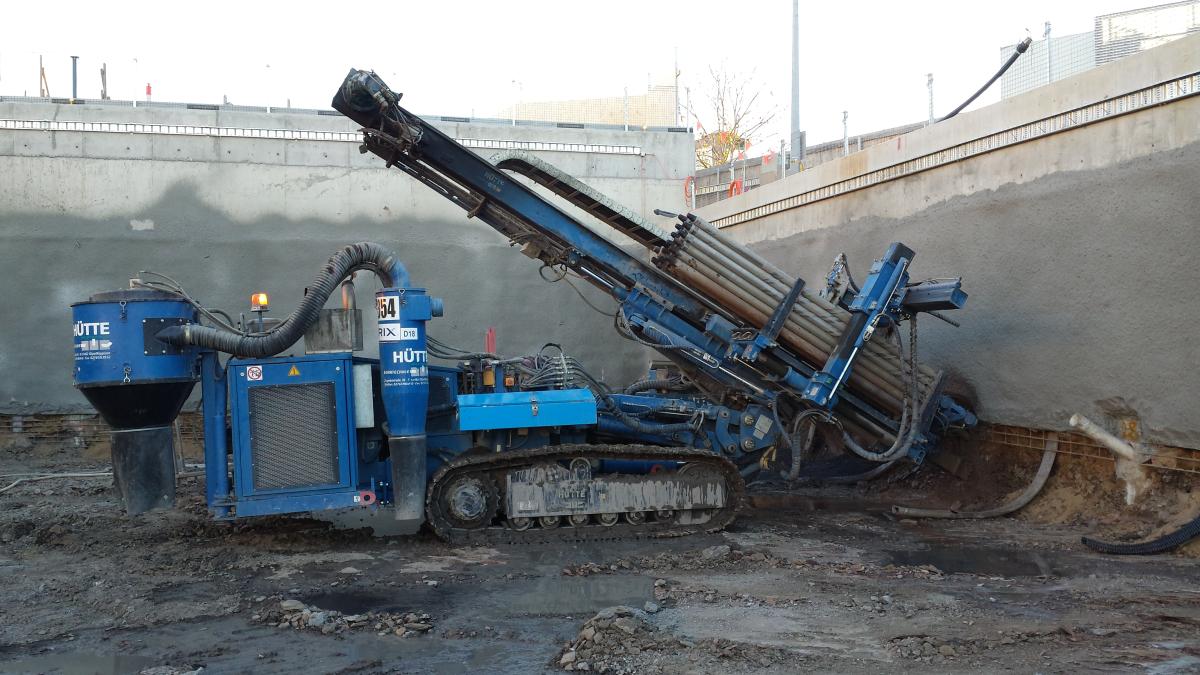
- Drill the borehole: A hole is drilled to the required depth, diameter and angle. Temporary casing may be used where loose, fractured or unstable ground needs support.
- Install the tendon: A threaded bar or multi-strand tendon is placed into the hole with a designed free length and bond length.
- Protect the free length: The free length is sheathed or debonded so it can stretch during stressing and does not transfer load into the surrounding ground.
- Grout the bond length: High-strength grout is pumped into the hole, commonly from the bottom up, to bond the tendon to suitable soil or competent rock.
- Remove temporary casing if used: Where casing has been installed, it is withdrawn in line with the drilling and grouting method.
- Allow the grout to reach strength: The grout must achieve the required strength before the anchor is stressed.
- Stress and test the anchor: A hydraulic jack applies the specified load, and testing confirms the anchor performs as designed.
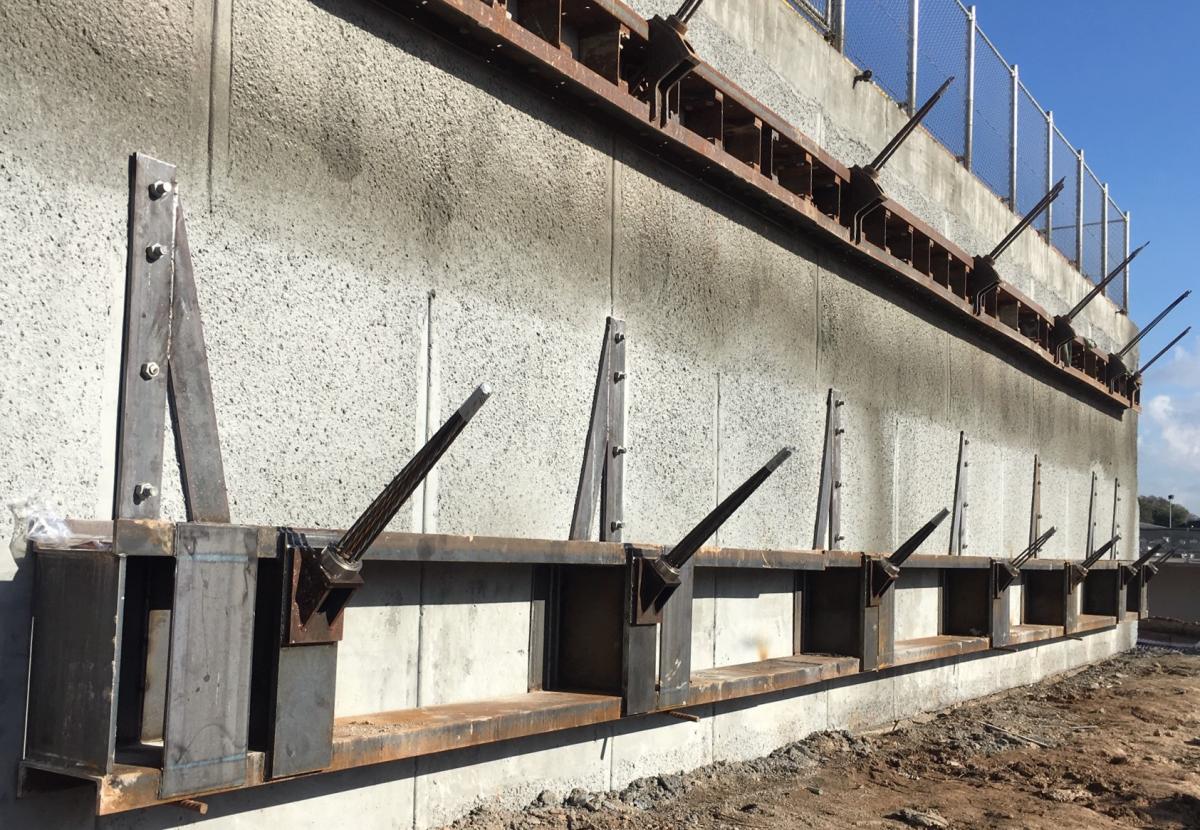
- Lock off the anchor: The anchor is locked off through the anchor head, bearing plate or waler so it can transfer load from the supported structure into stable ground or rock.
How do rock anchors differ from rock bolts?
Rock bolts are usually shorter reinforcement elements installed into fractured or unstable rock to help bind its mass together and reduce local movement, rockfall or collapse. On the other hand, rock anchors are generally longer, higher-capacity systems used where a structure needs deeper support.
Their key differences include:
- Purpose: Rock bolts reinforce unstable rock. Rock anchors transfer loads from a structure into stable rock.
- Load type: Rock bolts support local ground conditions. Rock anchors are designed for defined tensile loads.
- Depth and load capacity: Rock bolts are usually shorter and have lower capacity. Rock anchors are typically deeper and designed for larger structural forces.
- Installation: Rock bolts may be mechanically fixed, friction-based or grouted. Rock anchors are commonly drilled, grouted, stressed, tested and locked off.
- Applications: Rock bolts suit tunnels, mines, rock faces and shallow slope support. Rock anchors suit retaining walls, foundations, bridges, dams and major infrastructure.
At The RIX Group, our ground engineering specialists can help you determine which solution is best for your site. Contact us today for tailored advice.
Are rock bolts or rock anchors more suitable for my site?
Rock bolts are typically used to reinforce the rock mass itself, while rock anchors are used to transfer structural loads into deeper, more competent rock.
More specifically, rock bolts are installed in tunnels, mines, cuttings and slope stabilisation works. They help hold fractured or unstable rock together, reducing the risk of local movement, rockfall or collapse.
Meanwhile, rock anchors are used where a structure requires stronger, deeper anchorage. They are typically specified for retaining walls, bridge abutments, dams, foundations, basements, marine structures and other projects exposed to uplift, sliding or overturning forces.
Ultimately, the ideal choice depends on the rock condition, load requirements, anchor depth, access, groundwater and design life.
In some projects, rock bolts and rock anchors may be used together to provide both local reinforcement and deeper structural support.
Do ground anchors need to be certified in Australia?
Yes. Ground anchors generally need to be designed and certified by qualified engineers when used for retaining walls, excavations, foundations or slope stabilisation.
Relevant requirements can include AS 4678 for earth-retaining structures, AS 3600 for concrete elements, Austroads ATS 5140 for post-tensioned ground anchors, and any council or project-specific authority requirements.
Certification confirms the anchor system has been engineered to safely support the structure, given the site conditions, required loads, design life and corrosion protection needs. It may also cover installation records, proof testing, stressing results and final lock-off loads.
How long does ground anchoring take?
Ground anchoring timeframes depend on the number of anchors, site access, ground conditions, anchor depth, drilling method, testing requirements and whether the anchors are temporary or permanent.
Deeper anchors, difficult ground, groundwater, restricted access or grout curing requirements can extend the programme.
At The RIX Group, we can provide you with a project-specific timeframe after reviewing the geotechnical conditions, anchor design and site constraints.
Do you provide ground anchoring services across Australia?
Yes. Our ground anchoring crews are equipped to deliver projects throughout Australia and the Asia Pacific. Contact us today to determine the right solution for your site conditions and project requirements.
Contact The RIX Group
Need a quote or do you have a general enquiry? Please complete our online form and one of our team members will be in touch.