CFA Piles
Overview
Install Deep Foundations In Diverse Soil Conditions.
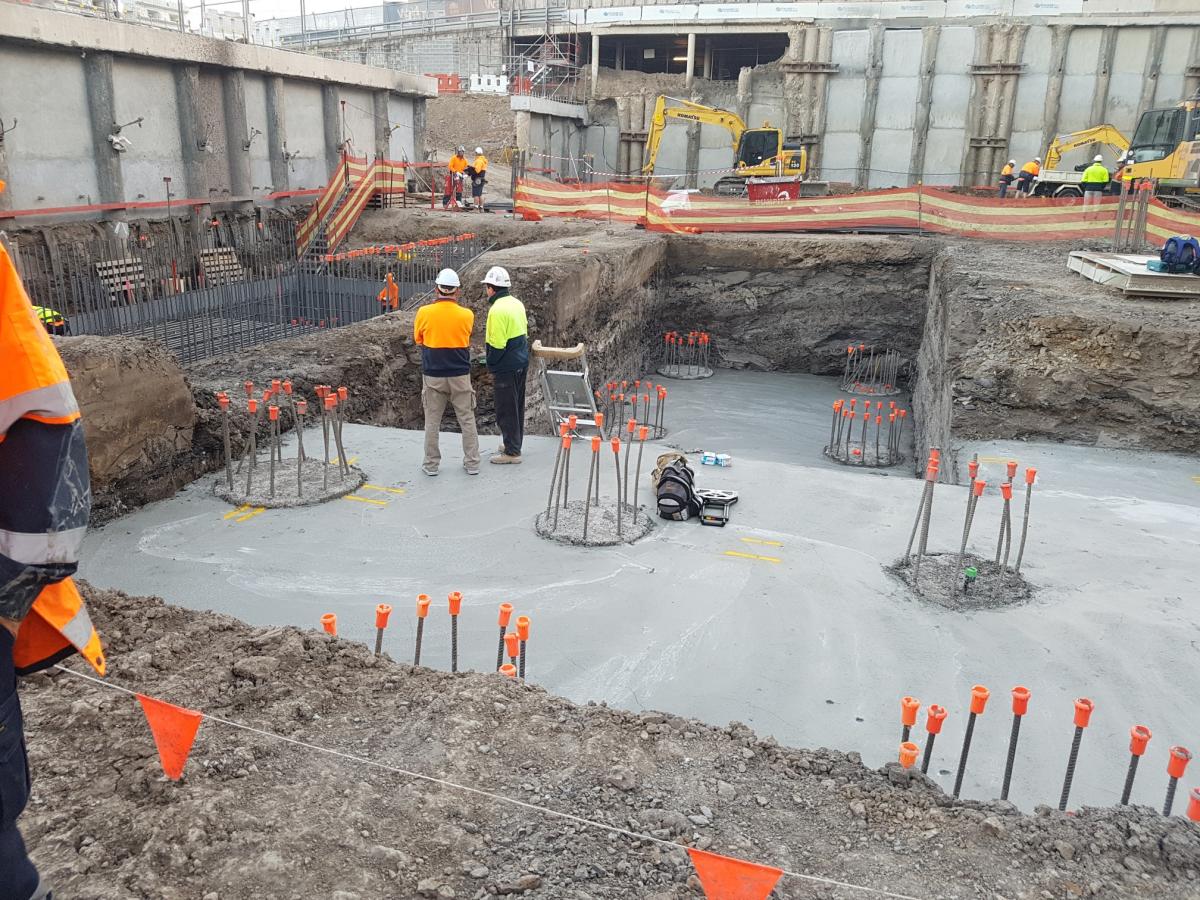
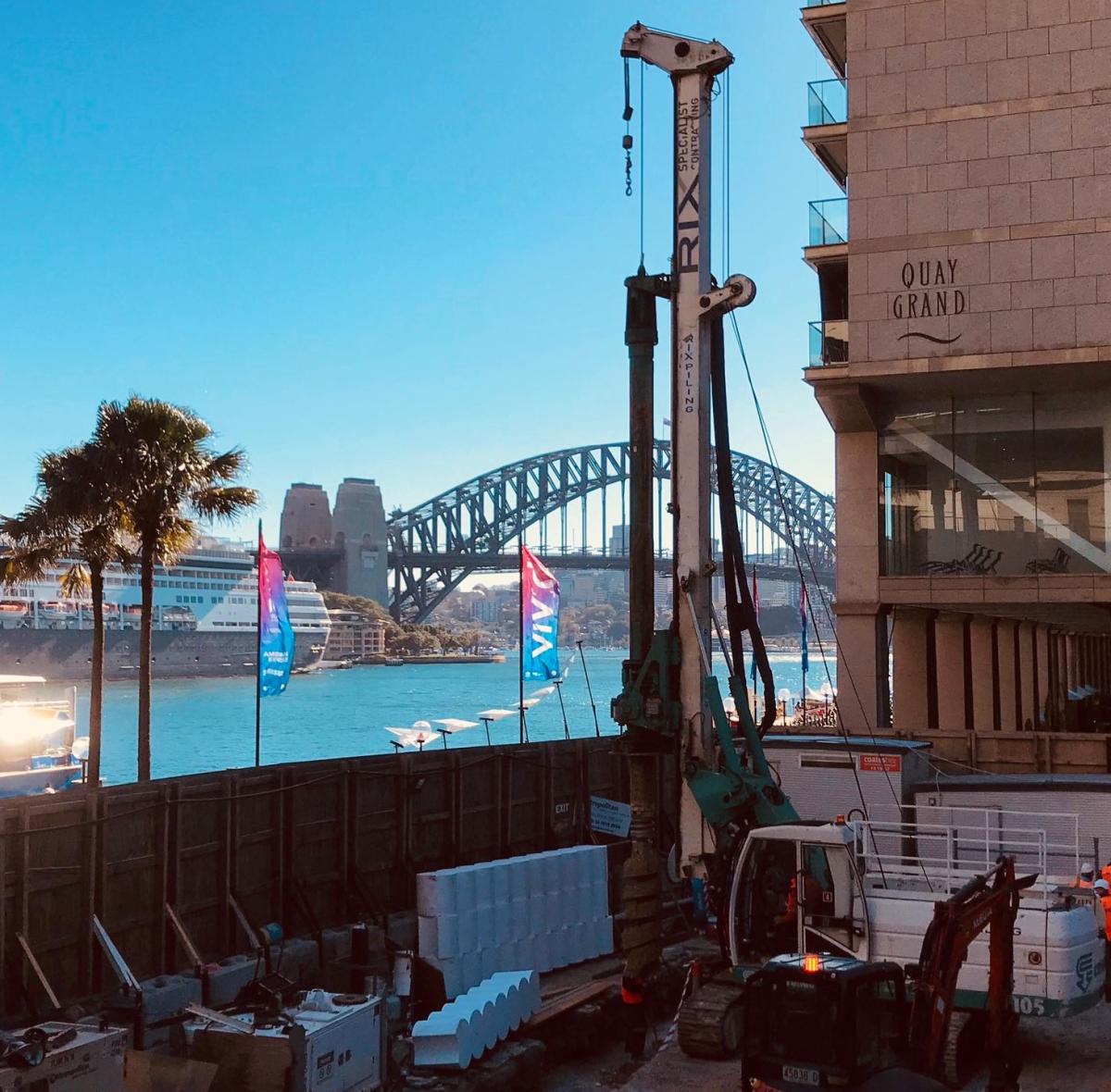
Continuous Flight Auger (CFA) piles are cast in place to resist compression, uplift and lateral loads across a range of applications. Quick, cost-effective and vibration-free, this versatile piling system is ideal for installing foundations in unstable ground conditions and urban areas.
The RIX Group provides end-to-end CFA piling services across Australia and the Asia Pacific, combining in-house design, modern piling rigs and highly experienced crews. Speak to our specialists for tailored solutions engineered to suit the ground conditions and structural demands of your project.
Contact Our CFA Piling Contractors
The Advantages Of CFA Piling
Supports Heavy Structural Loads
Carry loads with confidence. CFA piles can be designed to resist compression, uplift and lateral forces across building, infrastructure and retaining applications.
Pile diameter, depth, reinforcement and founding level are tailored to the structural loads and ground conditions of each project.
Efficient Construction
Keep piling works moving. CFA piles can be installed quickly because drilling and concrete placement form part of a continuous process.
In suitable ground, temporary casing is generally not required. This can reduce installation time, supporting plant requirements and overall construction costs.
Adapts To Challenging Ground
Build through varied ground conditions. CFA piling suits many clays, silts, sands and gravels, as well as some weak rock and water-bearing ground.
Concrete is pumped through the hollow auger stem as it is withdrawn, helping maintain bore stability without leaving an unsupported open hole.
Reduced Noise And Vibration
Minimise disruption on site. CFA piling produces low noise and minimal vibration compared with driven piling methods.
This makes it well suited to built-up areas, infrastructure corridors and sites with vibration-sensitive or adjacent structures.
Our CFA Piling Process
We manage the complete CFA piling process in-house, from design through to installation.
1. Site Preparation
We establish a stable working platform, confirm access requirements, identify underground and overhead services and set out each pile position to the approved drawings.
The piling rig is then positioned and aligned over the pile location, ready to drill within the required installation tolerances.
2. CFA Drilling
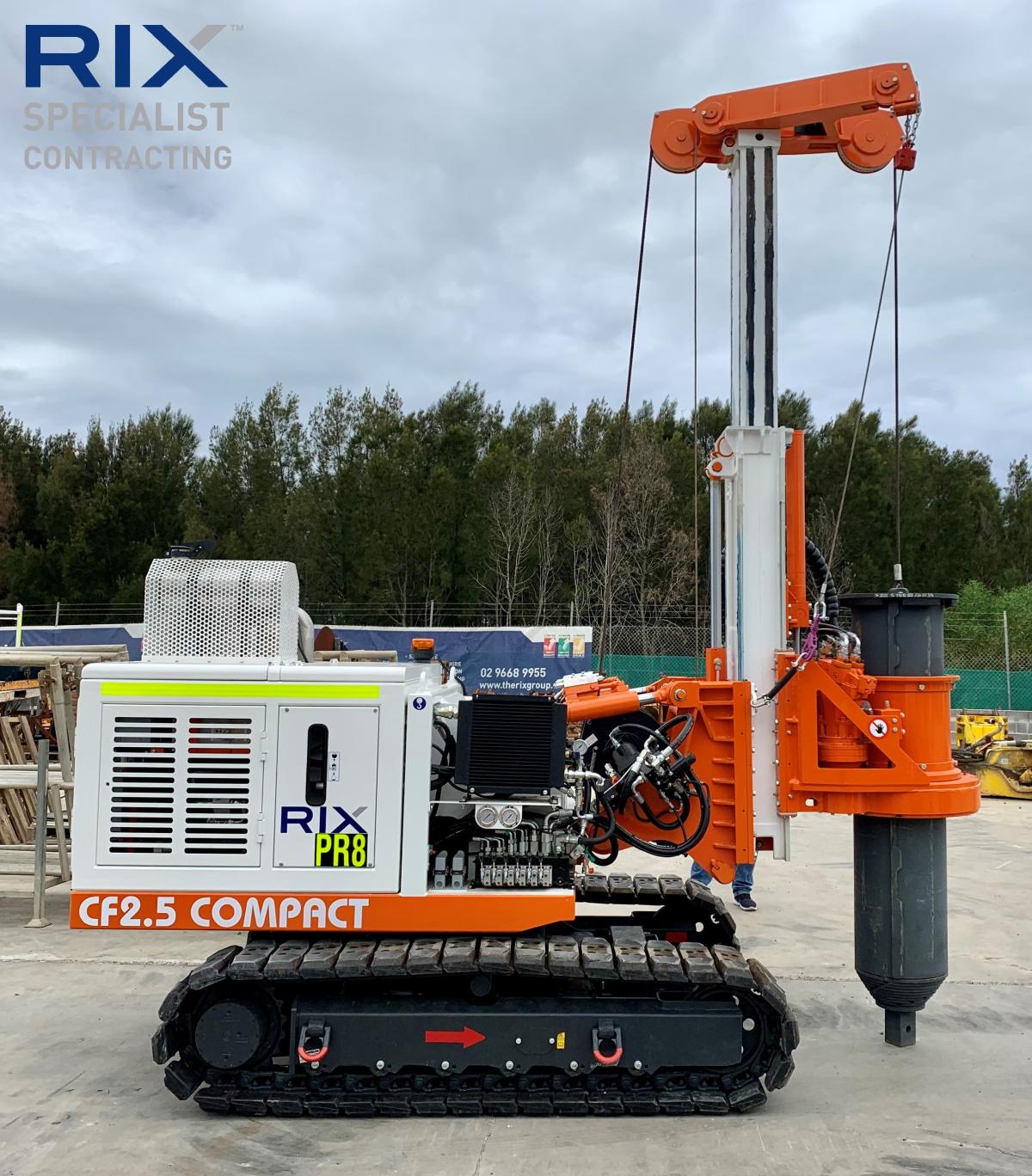
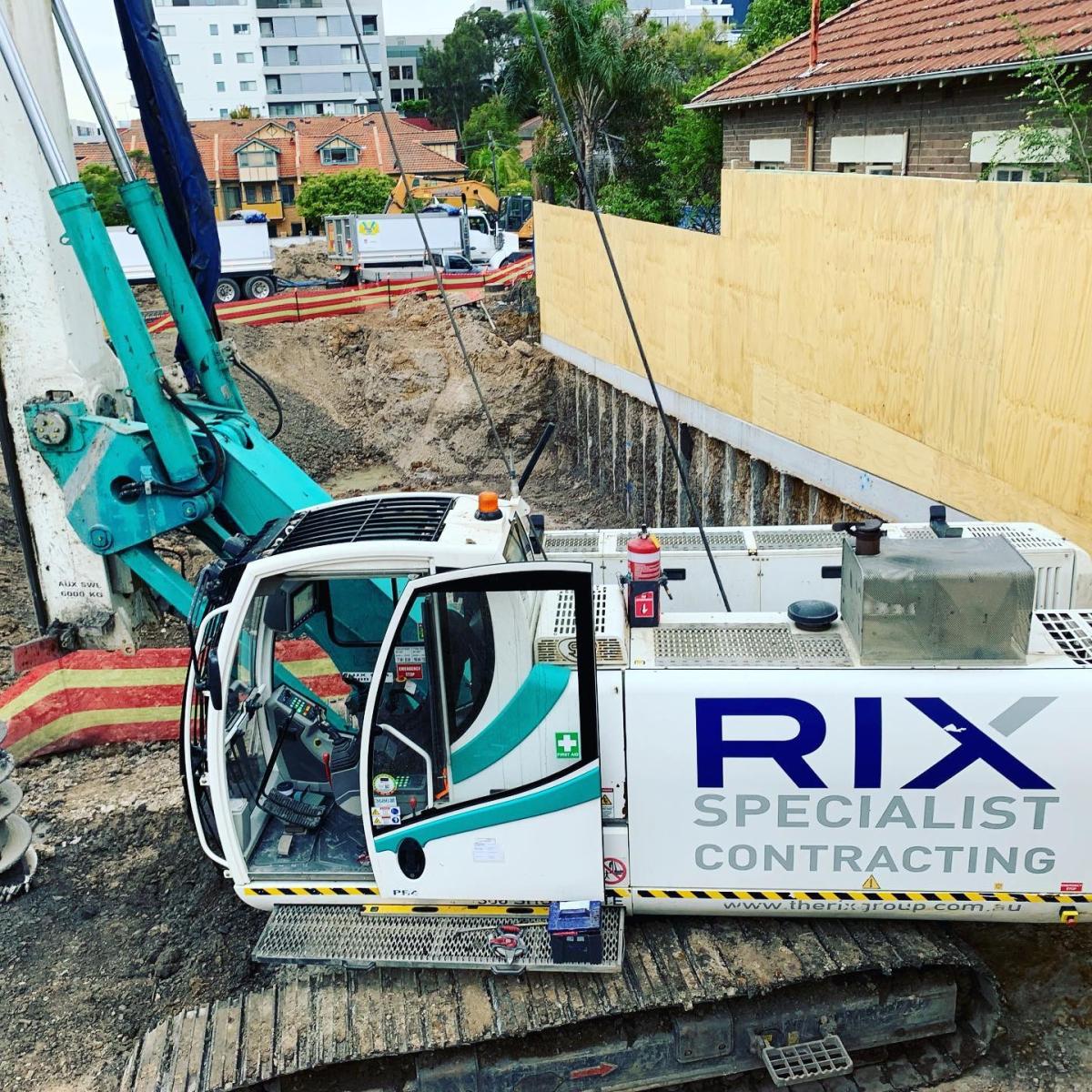
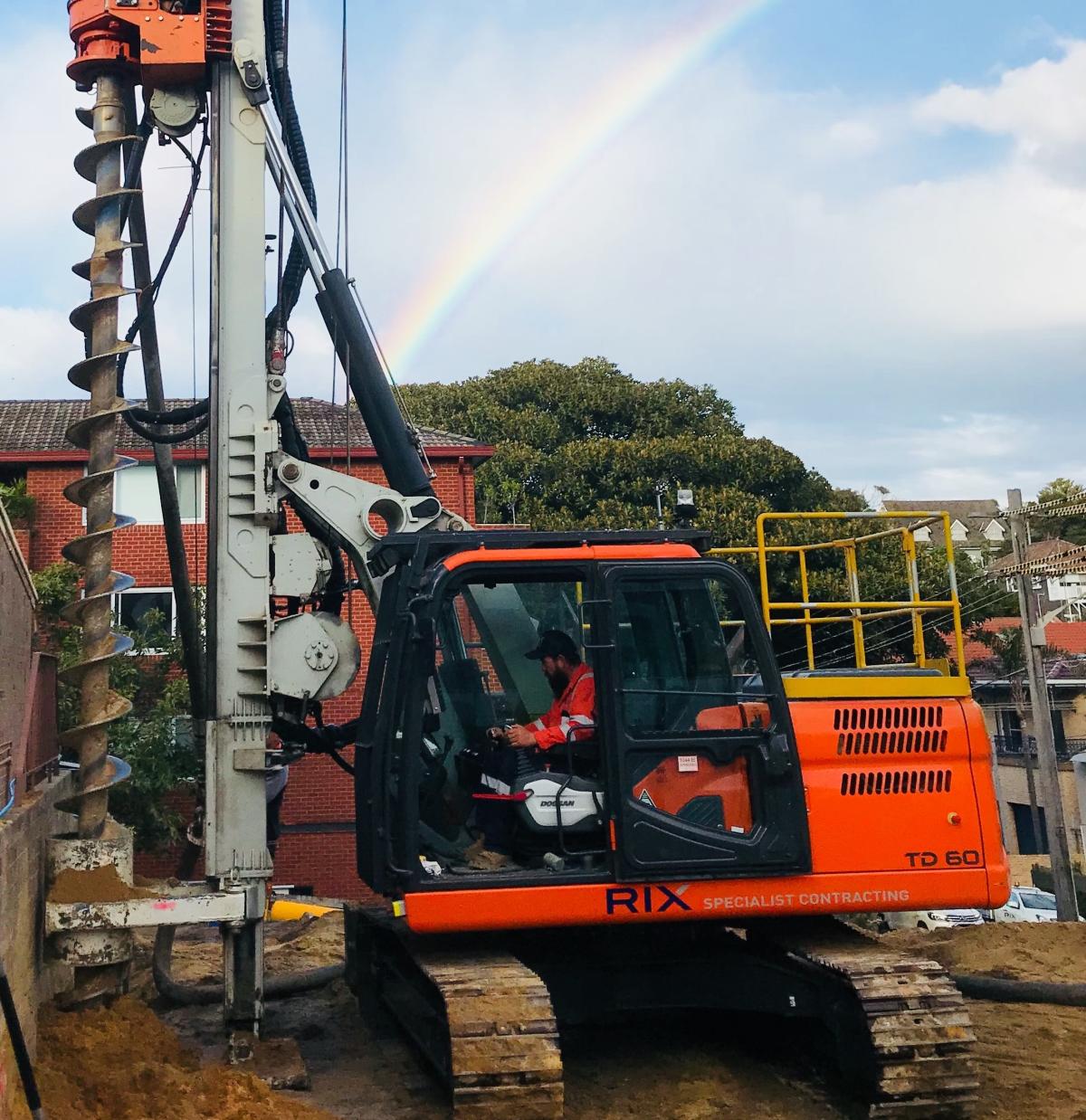
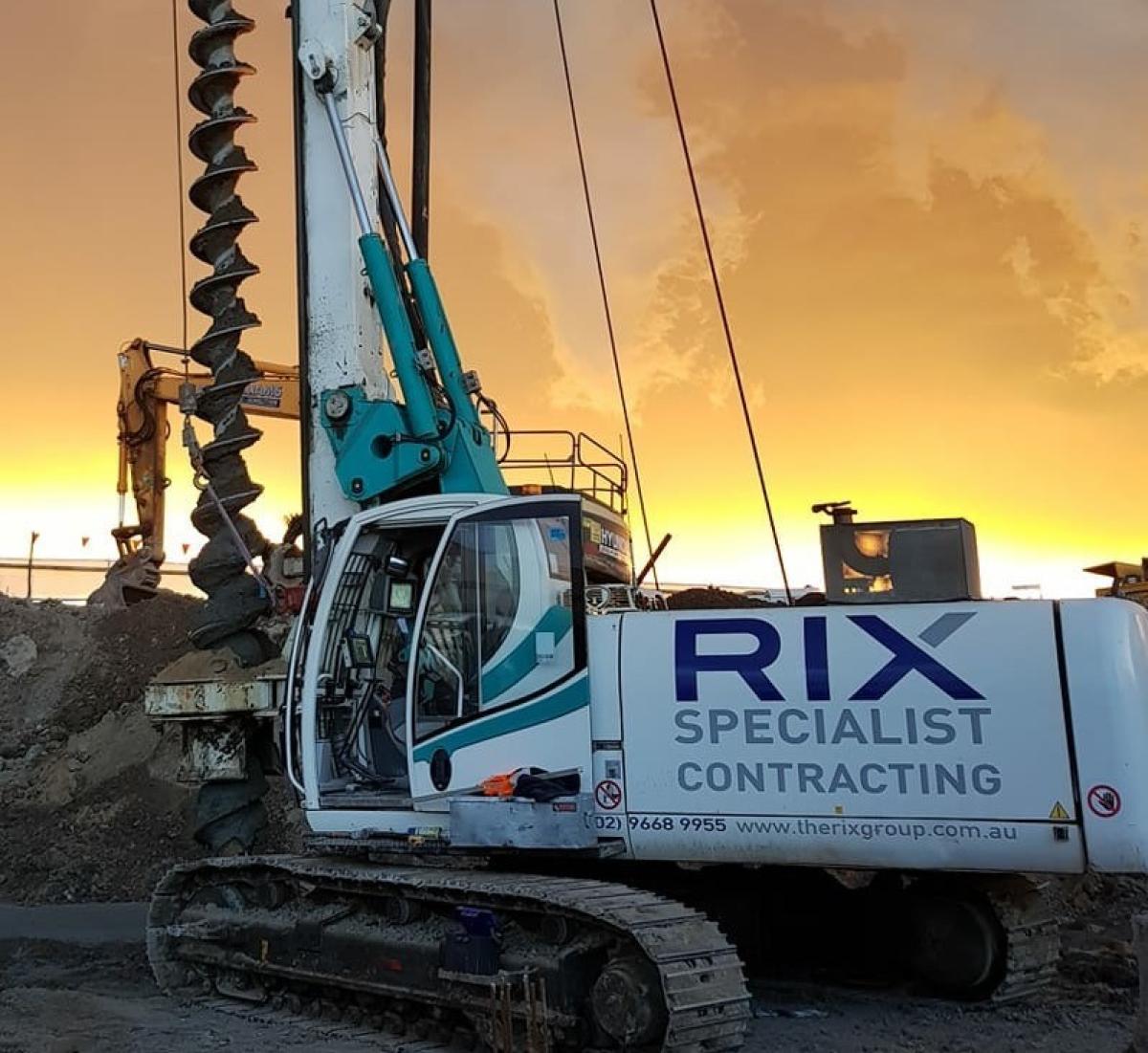
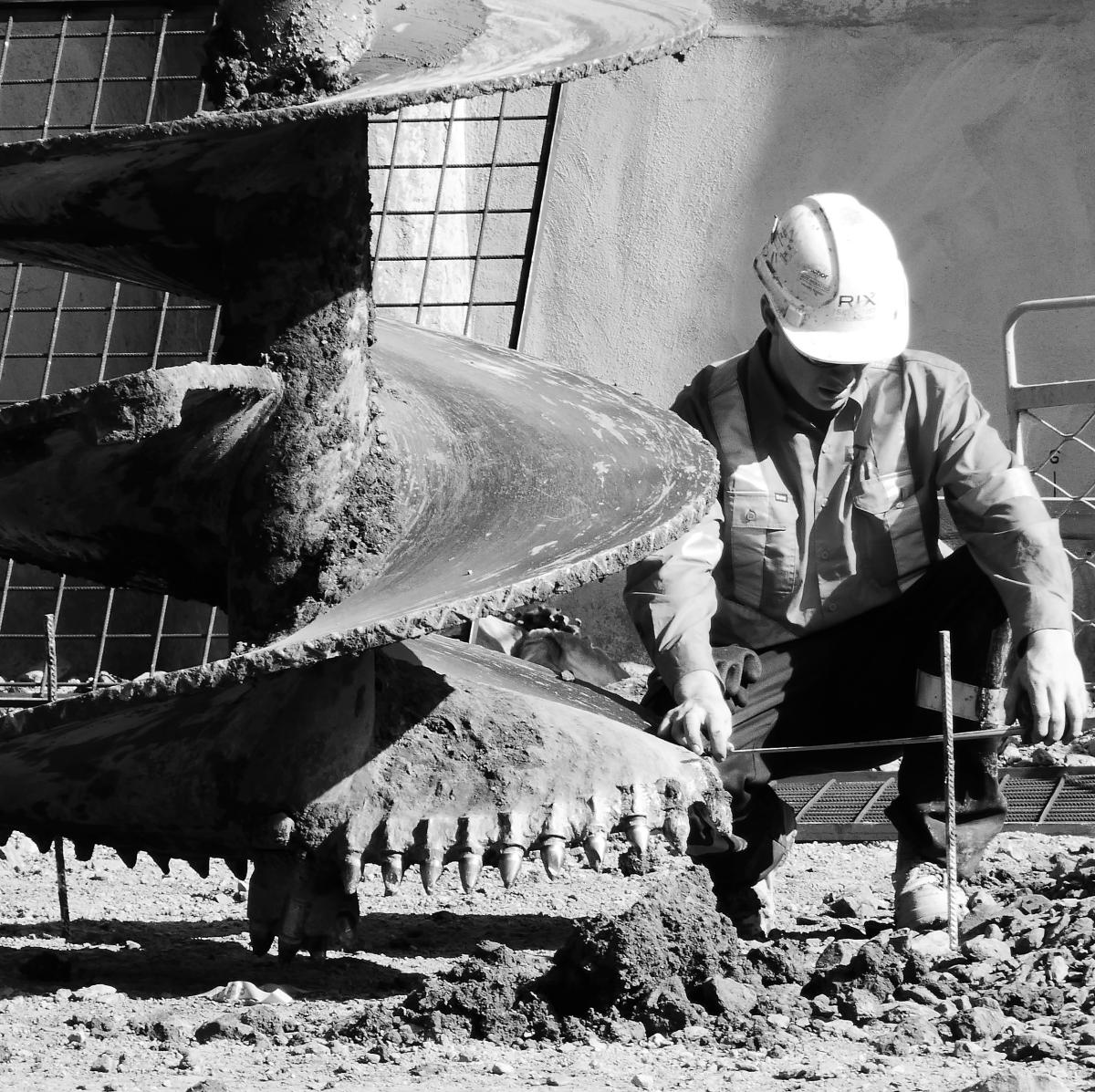
A hollow-stem continuous flight auger rotates into the ground to the specified pile depth or toe level. As drilling progresses, excavated soil travels up the auger flights to the surface.
The auger helps support the surrounding ground during drilling, reducing the need for temporary casing in suitable conditions.
3. Concrete Pumping
Once the specified depth has been reached, concrete is pumped through the hollow auger stem under controlled pressure. The operator progressively withdraws the auger while maintaining the required concrete flow and extraction rate.
This keeps the bore filled from the base upwards and forms a continuous concrete pile. Key installation data can also be monitored and recorded to help verify pile depth, concrete placement and construction quality.
4. Reinforcement Installation
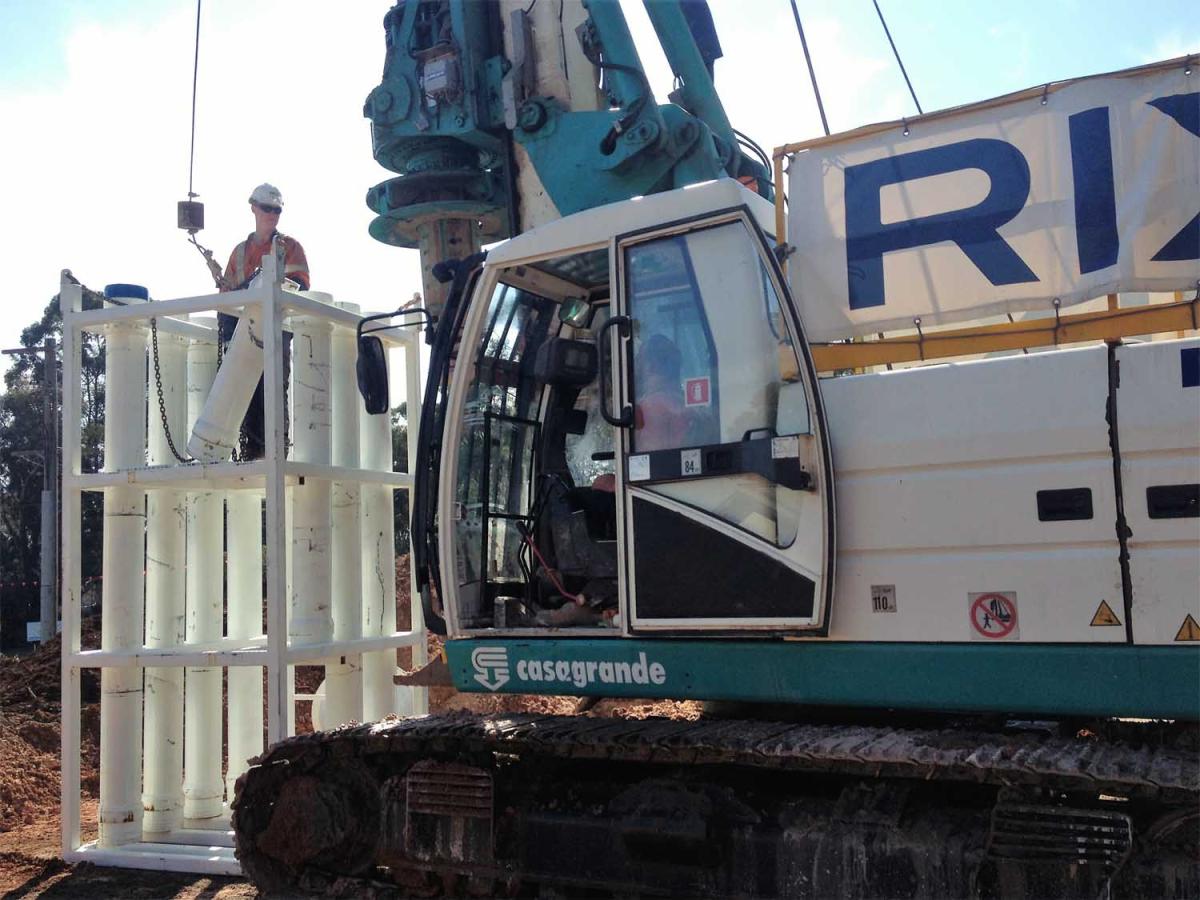
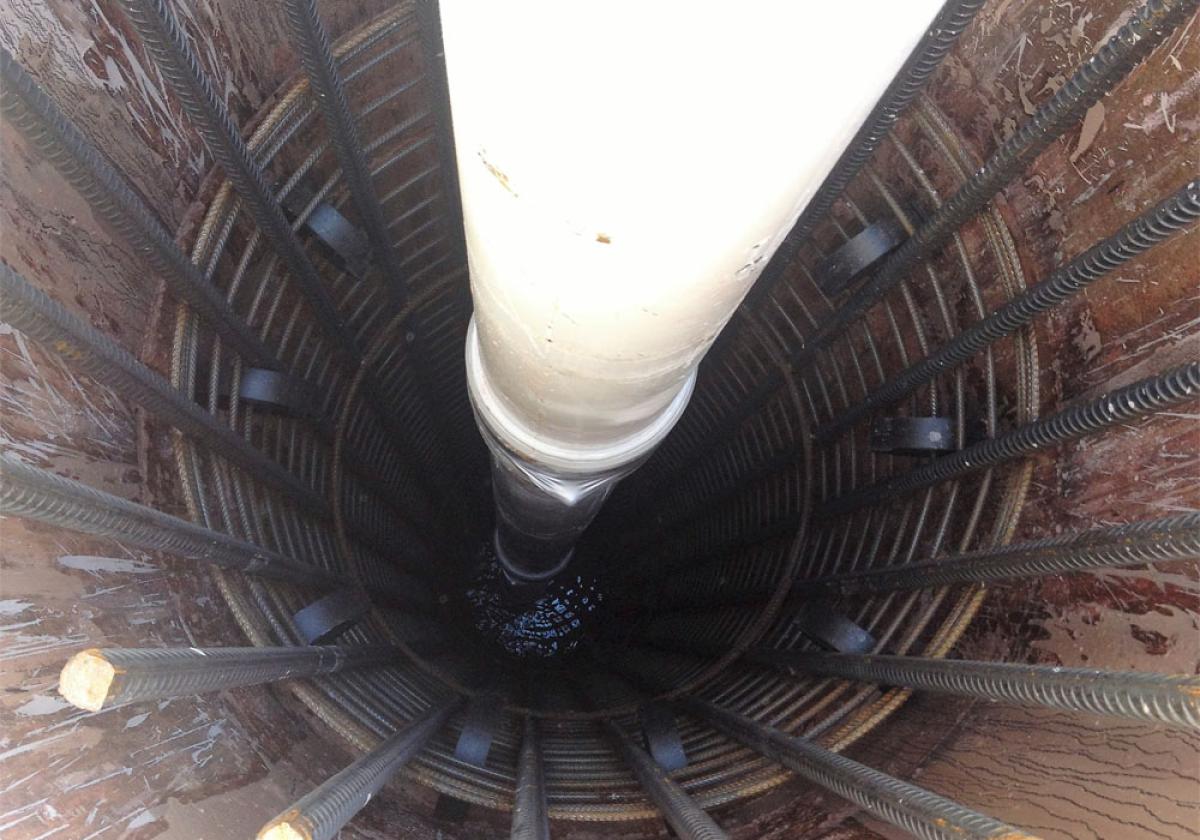
When concreting is complete, the reinforcement cage is inserted into the fresh concrete to the specified depth and position. This strengthens the pile for its designed loads.
The cage length, diameter and reinforcement arrangement are determined by the pile design and structural requirements. Where required, specialist equipment can assist installation into deeper or heavily reinforced piles.
5. Quality Control
We review installation records, pile positions, levels and other quality documentation against the approved design and specified tolerances.
Depending on the project, quality records may include concrete documentation, reinforcement records, survey data, pile installation logs, as-built information and pile testing results.
Where required, we provide the installation records and supporting documentation needed for certification and demonstrate that the CFA piling works comply with the specified project requirements.
Australia’s CFA Piling Specialists
On-The-Ground Expertise
Access end-to-end geotechnical knowledge, specialist CFA drilling equipment and decades of site experience. Every solution is engineered around ground conditions and project requirements to reduce risk and drive long-term results.
Superior Safety Standards
Protect people, plant and programme. From mobilisation to completion, safety is built into how we plan and deliver each pile. We apply strict WHS systems, trained crews and disciplined CFA piling procedures across every project.
Comprehensive Capabilities
Bring engineering and installation together. Our in-house capabilities ensure greater control, faster technical decisions and clear accountability across integrated geotechnical services.
FAQs
What is Continuous Flight Auger (CFA) piling?
CFA piling is a bored piling technique used to create deep concrete foundations with low noise and minimal vibration.
A hollow-stem continuous flight auger drills to the required depth in a single pass. Concrete is pumped through the hollow stem as the auger is withdrawn, filling the bore from the bottom up. The reinforcement cage is then inserted into the fresh concrete to complete the pile.
Unlike conventional bored piling, CFA piling generally doesn’t require temporary casing to keep the bore open in suitable ground. The soil held within the auger flights helps support the surrounding ground during drilling.
What are the most common applications of CFA piling?
CFA piling is used across transport, civil and water infrastructure projects. Its low-vibration installation method makes it particularly useful in locations where noise and ground disturbance need to be carefully controlled.
Common CFA piling applications include:
- Structural foundations: Transferring loads from commercial buildings, residential developments, industrial facilities and other structures into suitable bearing strata.
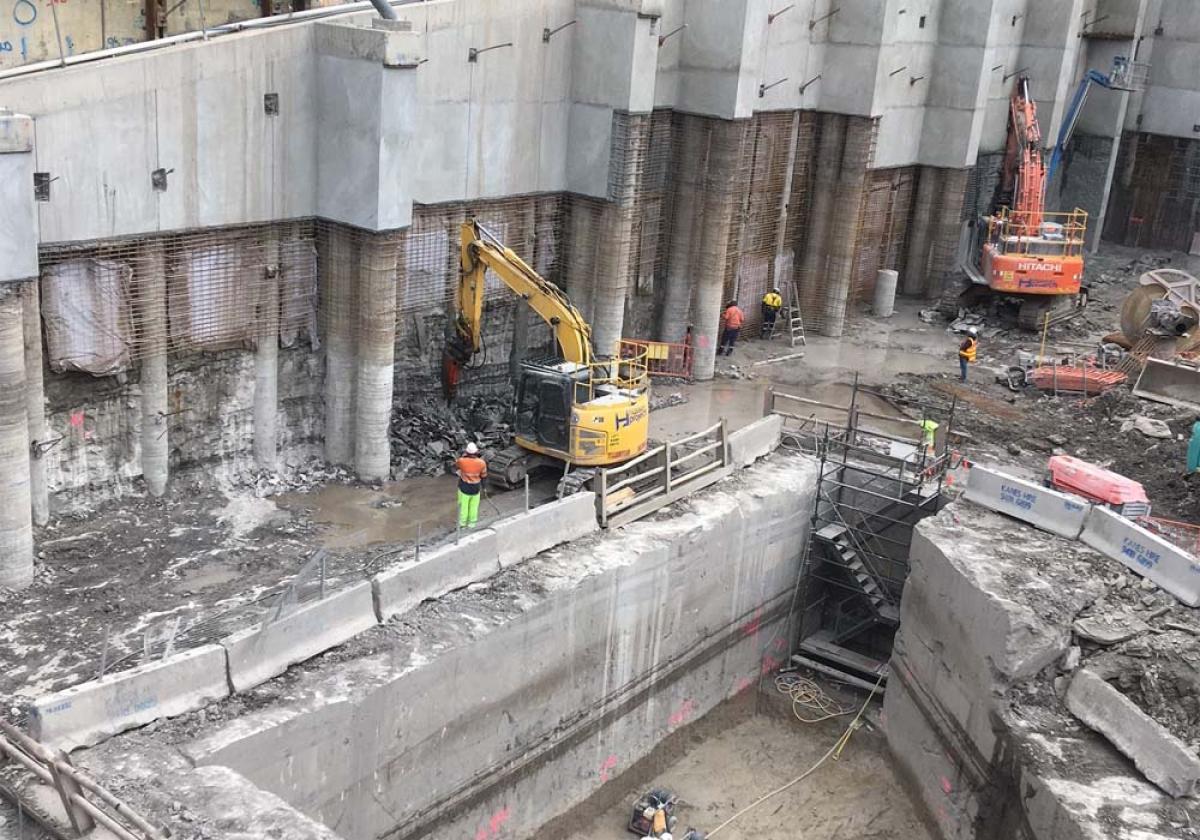
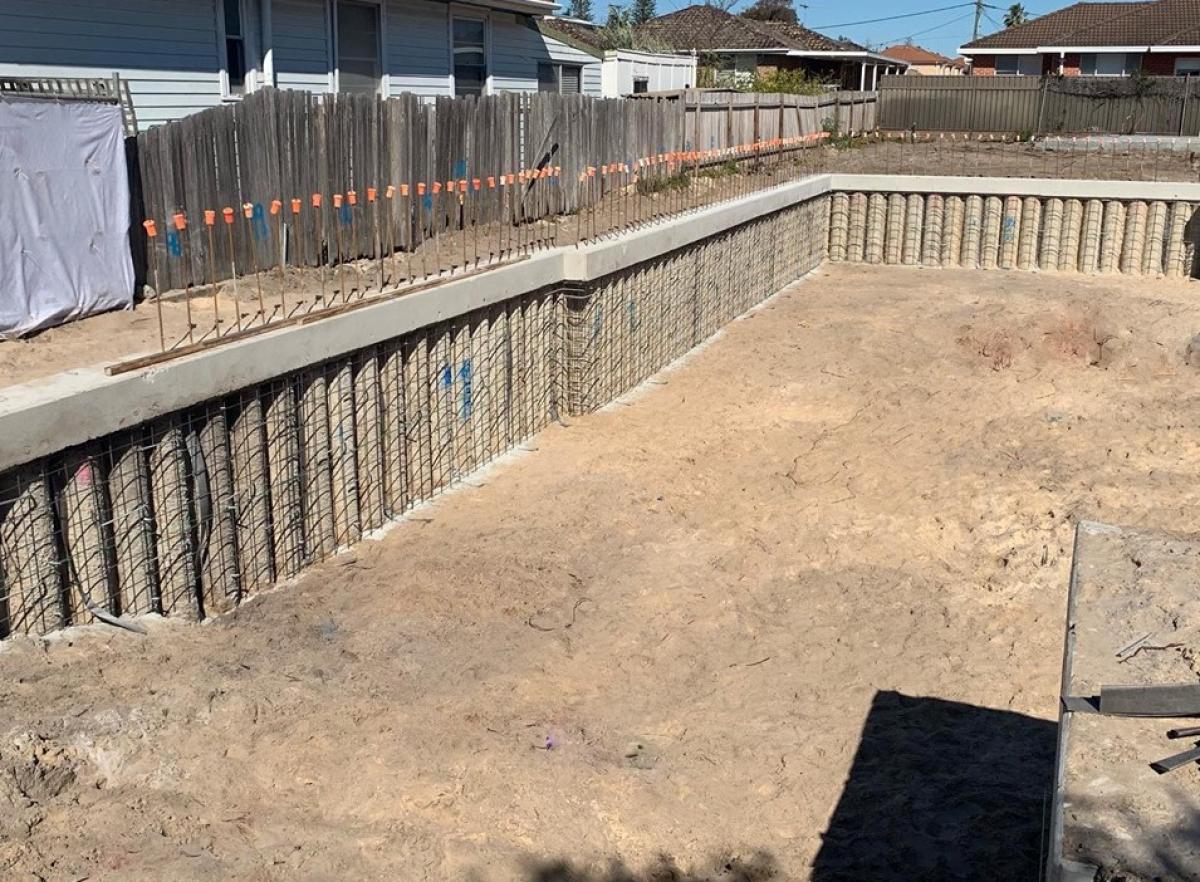
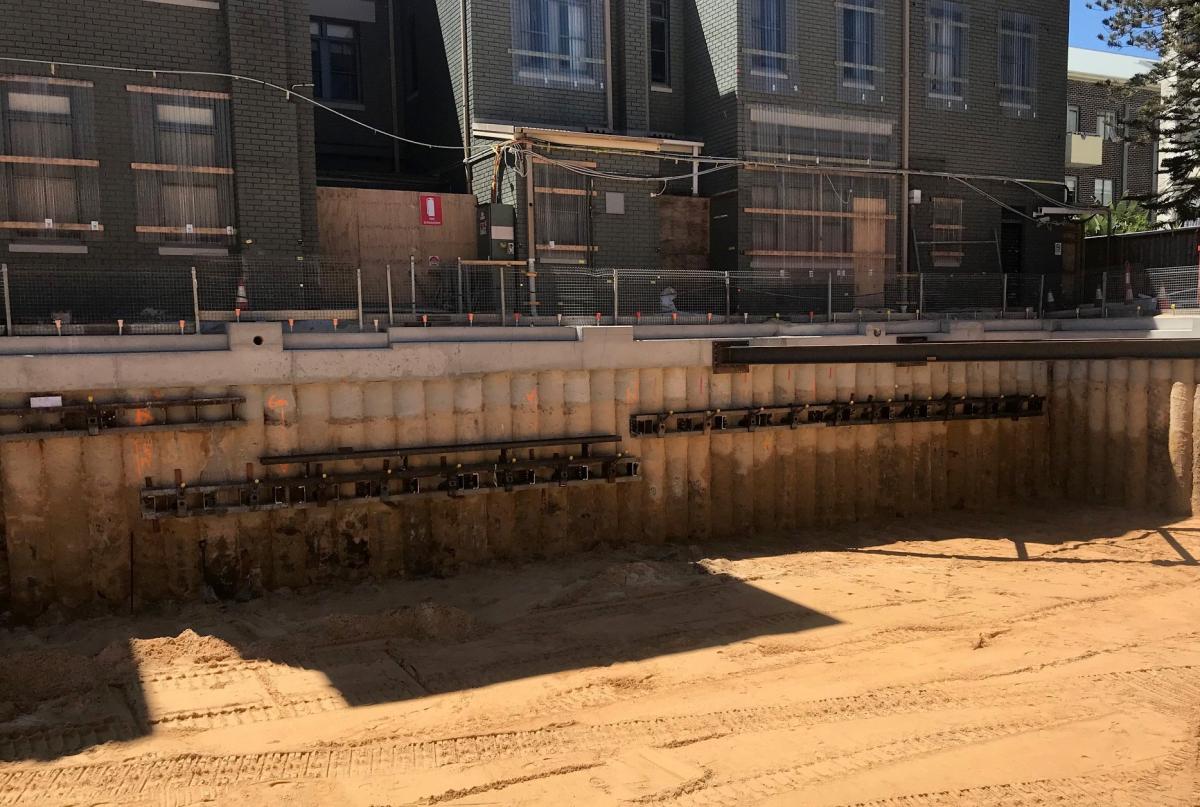
- Contiguous and secant pile walls: Creating temporary or permanent retaining systems around basements, excavations and site boundaries.
- Deep excavations: Supporting excavation faces where surrounding buildings, roads or services limit ground movement.
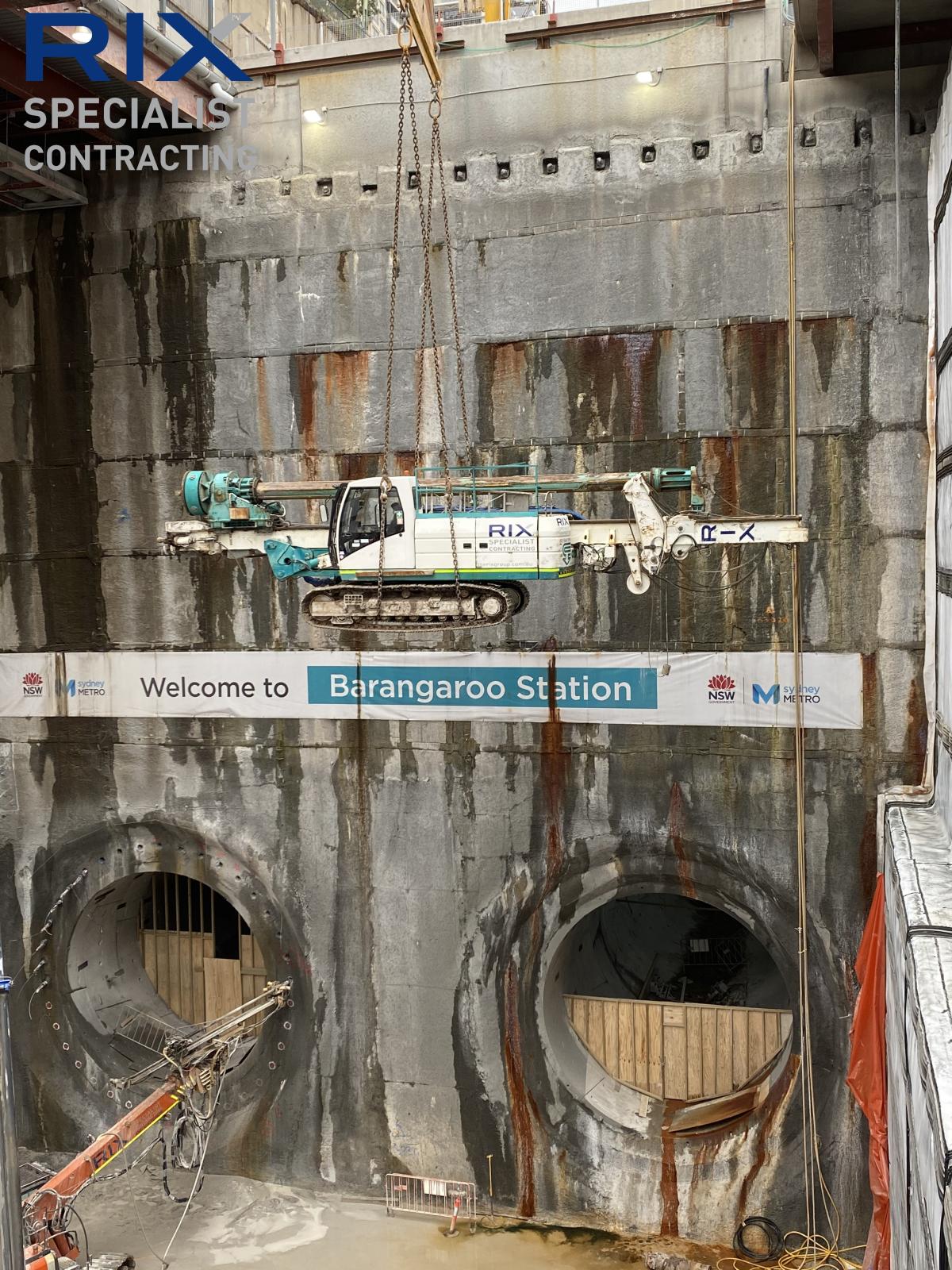
Slope stabilisation: Supporting unstable slopes and reducing the risk of slips or ground movement, often alongside ground anchors or other retention systems. - Tunnelling support: Supporting shafts, portals, retaining structures and associated infrastructure.
Can CFA piling be installed in any type of soil?
CFA piles can be installed through many clays, silts, sands and gravels, including water-bearing ground where conditions are suitable.
The final piling method should always reflect the geotechnical conditions, required pile capacity and presence of rock or obstructions.
What ground conditions are unsuitable for CFA piles?
CFA piles can work across a wide range of soils, but ground containing large cobbles, boulders, major obstructions or hard rock can make conventional CFA drilling unsuitable or uneconomical.
- Potential limitations include:
Large cobbles and boulders: These can obstruct the auger, slow penetration or prevent the pile from reaching its required depth. - Hard or competent rock: Conventional CFA augers may not achieve the required penetration, particularly where a substantial rock socket is needed.
- Buried obstructions: Old foundations, concrete, masonry and other unidentified obstructions can interfere with drilling.
- Highly variable ground: Rapid changes between soft soil and very dense or hard layers can require careful drilling control to avoid excessive soil extraction.
- Contaminated ground: CFA piling may still be technically suitable, but contaminated spoil can require controlled handling and disposal, which may affect the choice of piling method.
However, large cobbles, boulders and difficult drilling conditions do not automatically rule out CFA piling.
The geotechnical investigation and available piling equipment will be assessed before selecting the final method, as conventional bored piles, cased bored piles, micropiles or another foundation system may be more suitable.
How do I choose the right CFA piling contractor?
Choose a CFA piling contractor with proven experience, strong engineering capability, suitable piling rigs, effective quality control and a clear understanding of your site’s ground conditions.
Key factors to consider include:
- Relevant CFA piling experience: Similar project scale, pile sizes, depths and ground conditions. CFA piling requires precise control of drilling, concrete placement and reinforcement installation.
- Engineering capability: Ability to align geotechnical data, structural loads and construction methodology. In-house design can improve buildability on Design and Construct projects.
- Suitable plant and equipment: Correct rig capacity (torque, pull-down, extraction and auger length) plus suitability for site access, headroom and working platform conditions.
- Quality assurance: Control of pile position, depth, concrete volume/pressure, auger extraction and reinforcement placement. CFA success depends on process control, not just depth.
- Safety systems: Strong WHS systems, competent operators, safe rig procedures, and compliance with licences, approvals and exclusion zone requirements.
- Local ground knowledge: Familiarity with Australian soil conditions to anticipate drilling issues and select appropriate methods and equipment.
- Clear scope and pricing: Transparent inclusions beyond the piling rate, including mobilisation, concrete, reinforcement, spoil removal, testing, trimming and surveying.
Project coordination: Ability to manage interfaces with concrete supply, reinforcement, spoil removal and other trades to maintain programme.
At The RIX Group, we combine specialist CFA piling capability with engineering expertise, Design and Construct experience and a diverse modern piling fleet.
Contact us for a quote today.
Will you tailor the CFA piling strategy to my site?
Yes. We tailor each CFA piling strategy to the ground conditions, structural loads, pile requirements, site access and surrounding structures.
Before installation, our team reviews the available geotechnical information and project requirements to determine factors such as pile diameter, depth, reinforcement, founding conditions and suitable piling equipment.
We also consider practical site constraints, including:
- Groundwater conditions
- Existing buildings and structures
- Underground and overhead services
- Rig access and working platform requirements
- Concrete supply and placement
- Reinforcement handling
- Spoil removal
- Noise and vibration requirements
- Construction sequencing and programme
This site-specific approach allows us to select a CFA piling solution that meets the structural and geotechnical requirements while accounting for how the piles will actually be installed.
How long does a CFA piling project typically take?
There’s no standard duration for a CFA piling project. The overall timeframe depends on the number, diameter and depth of the piles as well as the ground and site conditions.
Before mobilisation, we will review the pile schedule, ground conditions and site constraints to develop a realistic piling programme that aligns with your wider construction schedule.
Can you work alongside external project teams?
Yes. We can coordinate CFA piling works with principal contractors, consultants and other specialist trades on major infrastructure and construction projects.
Early planning of these interfaces helps minimise trade clashes, protect completed works and keep the piling programme aligned with key project milestones.
Do you provide CFA piling services throughout Australia?
Yes. We install CFA piles throughout Australia and the Asia Pacific.
Contact our piling specialists today to determine the right technique for your site and project requirements.
Contact The RIX Group
Need a quote or do you have a general enquiry? Please complete our online form and one of our team members will be in touch.