Helical Screw Piles
Overview
High-Strength Foundation Support With Minimal Ground Disturbance.
Achieve safe and reliable foundation support, without the time, cost or disruption of major excavation. Helical screw piles rotate deep into stable soil, where they transfer structural loads below the surface.
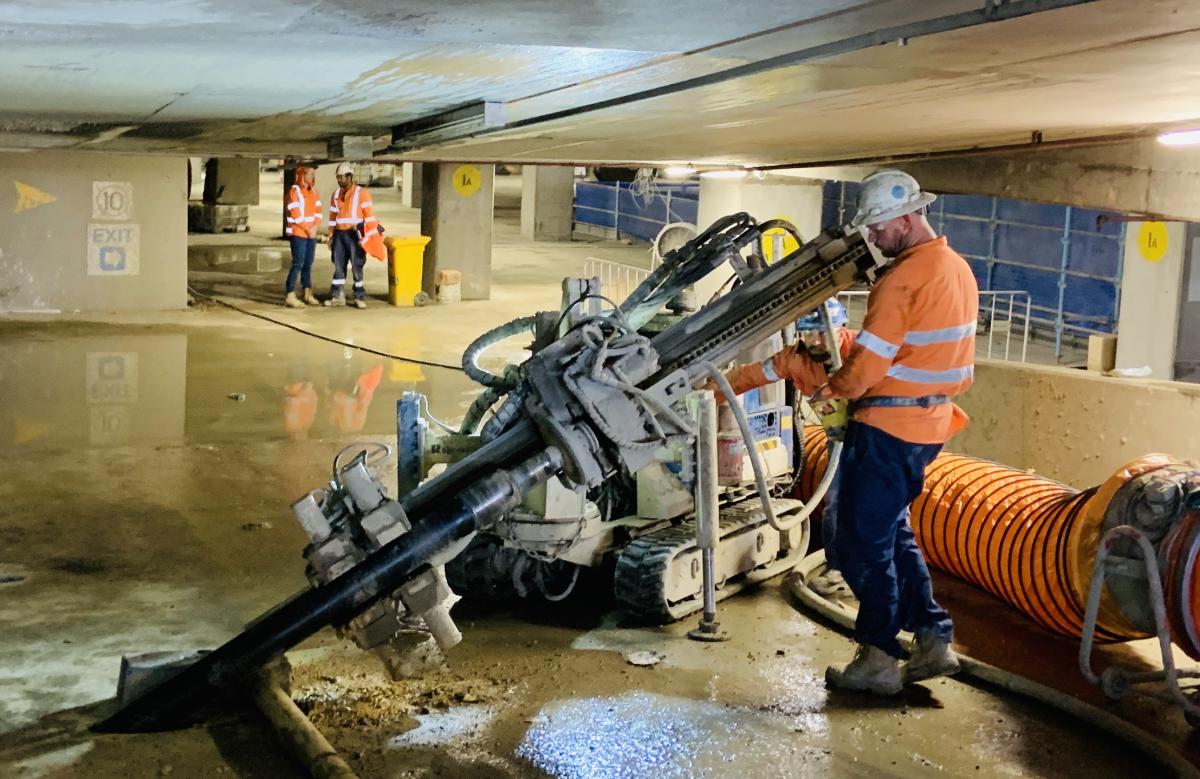
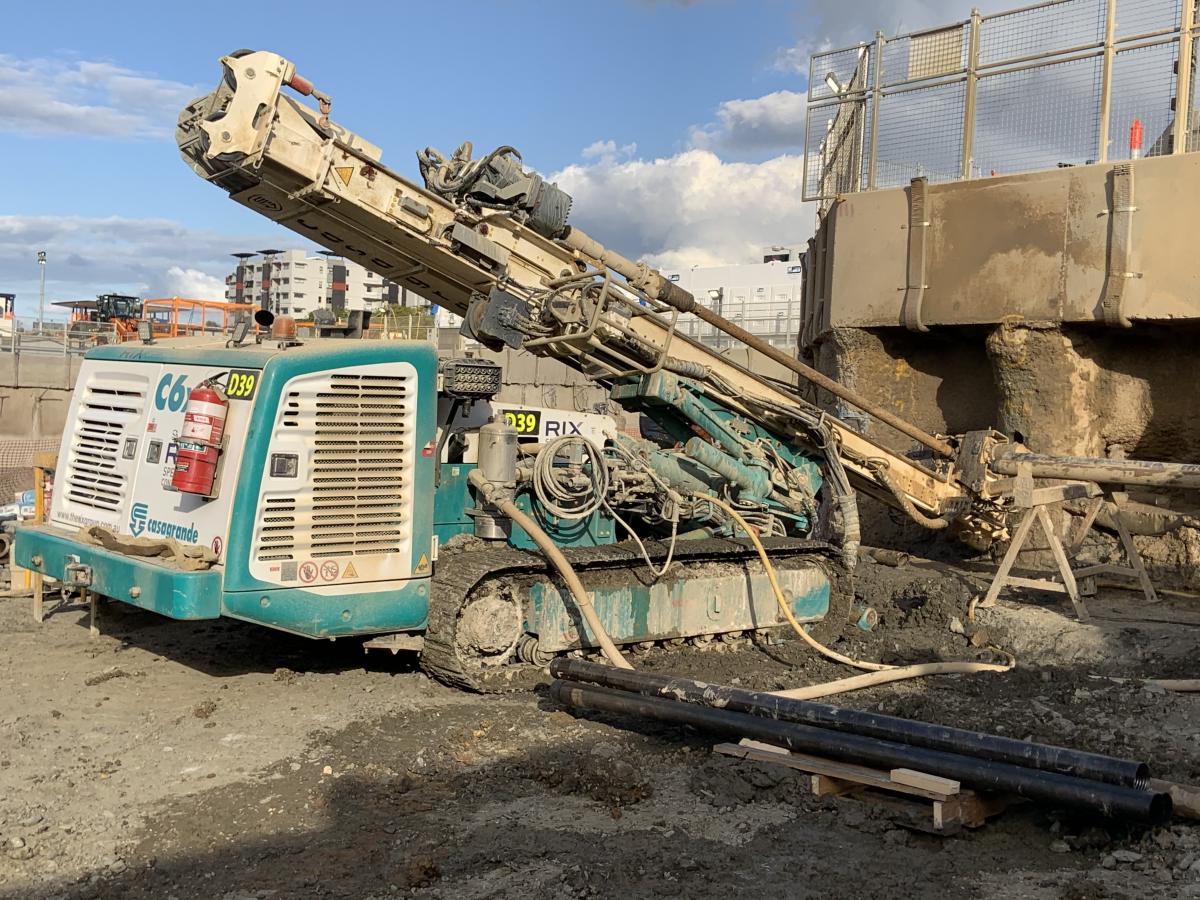
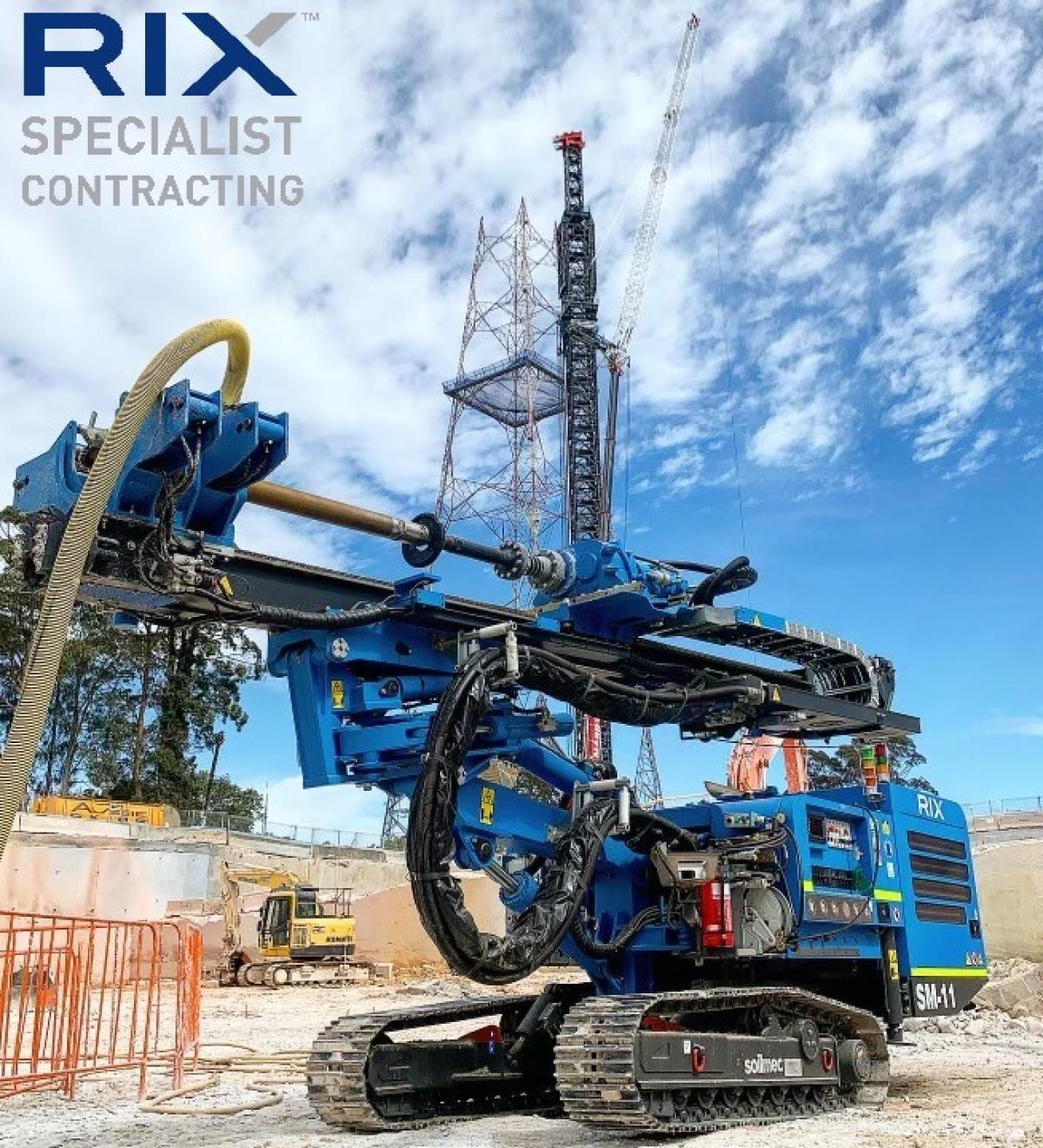
Whether you require screw piling for a residential, commercial, civil, mining, or renewables project, trust The RIX Group for end-to-end delivery. Equipped with an in-house steel fabrication facility, we design, manufacture and install steel screw piles in complex ground conditions across Australia and the Asia Pacific. Discover streamlined screw piling solutions that meet AS 2159 standards.
Contact Our Screw Piling Experts
Comprehensive Screw Piling Services
- Screw pile design for a wide range of project types and ground conditions
- In-house manufacturing at our dedicated steel fabrication facility
- Site surveys and pre-installation guidance, including ground condition reviews and constructability input
- Screw pile installation in a multitude of site conditions and locations
- Certified installation completed by experienced screw piling technicians
- On-site pile testing, including static load, lateral, compression, and tension testing
- Complete Design and Construct (D&C) packages
- Custom screw piling systems for remote access and complex ground conditions
The Benefits Of Screw Pile Foundations
Fast installation
Complete foundation works more quickly. Screw piles are installed without deep excavation, formwork or concrete curing time. Once their locations are set out, each pile can be screwed into place quickly, helping your construction program stay on track.
Minimal site disruption
Keep your site cleaner and easier to manage. With zero excavation spoil and heavy machinery movements, screw piling is ideal for built-up and sensitive environments. The helices displace soil downward instead of removing large volumes of material.
H3: Immediate load-bearing capacity
Start building sooner. Screw piles can carry design loads as soon as they are installed, subject to engineering requirements and any required testing. With no curing period required, construction crews can move straight into slab preparation, framing or the next stage of works.
Cost-effective support
Reduce labour, groundworks and programme delays. This efficient foundation solution can help cut project costs by limiting excavation, spoil removal, concrete use and installation time. Final costs depend on pile size, depth, site access, load requirements and ground conditions.
Diverse soil conditions
Match the pile design to the soil profile. Screw piles can be engineered for clay, sand, silt, fill and reactive soils, with shaft diameter, helix configuration and depth tailored to the site conditions. They can also be designed to handle compression, tension and lateral loads where the ground is variable or unstable.
Compact equipment
Reach sites larger rigs cannot. Screw piles can be installed with compact equipment, making them suitable for narrow blocks, steep slopes, existing structures, busy urban areas and restricted access sites.
Superior sustainability
Use less concrete, create less spoil and reduce environmental disturbance. With fewer truck movements, less waste and reduced soil displacement, screw piles are a cleaner choice for sensitive sites and temporary works. When no longer needed, they can often be removed to reduce long-term site impact.
Reusable design
Use the same piles for different jobs. Depending on pile condition, project requirements and engineering approval, screw piling can be removed and reused. This makes them a practical choice for temporary structures, relocatable buildings and sites that may need to be restored later.
Our Streamlined Screw Piling Process
1. Site survey
We start with a site survey to assess access, ground conditions, pile locations and project constraints. This gives our engineering and design team the information needed to deliver a highly durable solution from the outset.
2. Design
Our engineers develop a custom screw piling solution for your site, structure, ground conditions and required load bearing capacity. Once this design is finalised, you will receive a clear scope and a detailed quotation before work begins.
3. Manufacture
We manufacture your screw piles to precise specifications. Our in-house steel fabrication facility ensures tight control over pile quality, sizing, project timelines and custom requirements.
4. Schedule
The installation schedule, pile quantities, required accessories and documentation are confirmed. These checks help reduce delays on site and ensure the right materials arrive ready for installation.
5. Installation
Each pile is screwed into the ground to the required depth using specialised equipment. These screw piles can provide immediate load-bearing support, subject to engineering requirements and any required testing.
6. Certification
We supply the relevant design and installation documentation for your project records. Where required, our engineers can provide certification confirming the screw piles have been installed in line with the approved design.
FAQs
What are screw piles?
Screw piles, also called helical piles or screw piers, are steel foundation piles with one or more helical plates welded to the shaft. They are rotated into the ground using specialised equipment until they reach the required depth, torque or bearing layer.
Once installed, screw piles transfer structural loads through the steel shaft and helices into stable ground below the surface. This creates a high-strength foundation support for commercial buildings, homes, mining and civil infrastructure, retaining systems, boardwalks, solar farms and temporary structures.
Unlike some traditional piling methods, screw piles usually require minimal excavation and no concrete curing time.
This can make them faster to install, easier to use on restricted sites and suitable for a wide range of Australian ground conditions when designed and installed by qualified professionals like The RIX Group.
What are the key differences between screw piles and traditional concrete piles?
Screw piles are steel piles rotated into the ground, whereas traditional concrete piles are usually bored, driven or cast into place. The main differences are installation speed, excavation needs, ground disturbance, curing time and site access requirements.
| Feature | Screw piles | Traditional concrete piles |
| Installation speed | Usually faster to install, with no concrete curing period | Can take longer, especially where drilling, spoil removal, reinforcement or curing is required |
| Ground disturbance | Minimal excavation and less spoil | Often requires drilling, excavation or soil displacement |
| Load capacity | Can be engineered for compression, tension and lateral loads | Commonly used for high-load structures and deep foundation systems |
| Site access | Well-suited to restricted, sloped or built-up sites using compact equipment | Often needs larger rigs, more working space and heavier machinery |
| Noise and vibration | Generally lower impact than driven piling methods | Driven piles can create more noise and vibration, while bored piles create more spoil |
| Programme delays | Loads can often be applied immediately after installation, subject to engineering requirements and testing | Cast-in-place concrete piles need time for the concrete to gain strength |
| Removal | Can often be removed for temporary works, depending on design and site conditions | Usually designed as a permanent foundation system |
| Wet or variable ground | Can perform well when designed for the soil profile and required loads | May need casing, dewatering, stabilisation or other controls depending on the piling method |
Ultimately, screw piles are often chosen for projects that need faster installation, less excavation and reduced site disruption. Concrete piles may be preferred for some large-scale, high-load or highly specific ground engineering applications.
The right option depends on the structure, soil profile, access, loads, budget and engineering design. At The RIX Group, we can provide you with tailored advice on the most reliable and cost-effective solution for your site.
What are the different types of screw piles?
There are many different types of screw piles, which vary based on shaft size, helix size, number of helices, installation depth and whether the pile needs to resist compression, tension or lateral loads.
The main screw pile types include:
- Small-diameter screw piles: Used for lighter structures such as decks, residential extensions, small buildings and tight-access projects.
- Large-diameter screw piles: Designed for higher load requirements, including commercial buildings, industrial structures, bridges and retaining systems.
- Single-helix screw piles: Often used where ground conditions and load requirements can be met with one bearing plate.
- Multi-helix screw piles: Used when extra bearing capacity is needed, especially in softer or variable ground.
- Compression screw piles: Engineered to carry downward loads from buildings, slabs, columns and structural footings.
- Tension screw piles: Designed to resist uplift forces, making them useful for towers, masts, solar structures, anchors and wind-exposed assets.
- Lateral-load screw piles: Made to manage sideways forces, often used for retaining walls, signs, poles and infrastructure projects.
The right screw pile type depends on the engineering design, site access, soil conditions and load requirements. Contact us today for more information.
What are the most common screw piling applications?
Screw piles are commonly used for residential, commercial, civil, infrastructure and renewable energy projects that demand fast, engineered foundation support with minimal excavation.
Common screw piling applications include:
- Residential builds and extensions, including new homes, additions, decks and granny flats
- Commercial and industrial structures that require strong foundation support in varied ground conditions
- Retaining walls and bridge works, where piles may need to resist compression, uplift and lateral loads
- Solar farm foundations, including ground-mounted solar arrays and renewable energy infrastructure
- Boardwalks, piers and jetties, especially where low ground disturbance is important
- Light poles, signage and masts, where fast installation and reliable uplift resistance are required
- Temporary structures and relocatable buildings
- Restricted access sites, where compact installation equipment can reach areas that larger equipment cannot
- Tight urban blocks, sloped sites, sensitive environments and projects where excavation, spoil removal, or concrete curing would slow the job down
For tailored advice on whether this is the right foundation support for your project, please get in touch with our team today.
What factors influence how screw piles perform?
Screw piling performance depends on how well the pile design matches the ground conditions, structure and required loads. The most important factors to consider include:
- Soil type: Clay, sand, silt, fill and mixed ground all affect how a screw pile carries load. Softer or variable soils may need deeper piles, larger helices or a different pile configuration.
- Moisture levels: Wet or changing ground conditions can affect soil strength, friction and load transfer, especially in reactive or poorly drained sites.
- Helix size and layout: Larger or multiple helices can increase bearing area and improve performance in softer soils, depending on the approved design.
- Shaft diameter and wall thickness: The steel shaft must be sized to suit the structural loads, installation torque and site conditions.
- Pile length and depth: Deeper installation can help the pile reach stronger ground layers and improve resistance to compression, uplift and lateral loads.
- Installation torque: Torque readings help indicate how the pile is performing during installation. They should be checked against the engineering design and any required testing.
- Load requirements: Screw piles may need to resist compression, tension, lateral loads or a combination of all three, depending on the structure.
A proper site assessment and engineered pile design help ensure each screw pile is installed to the right depth, capacity and specification.
How do soil conditions impact screw piling?
Soil conditions determine how screw piles are designed, installed and verified. The soil profile affects pile depth, shaft diameter, helix size, installation torque and the load capacity each pile can achieve.
Clay, sand, silt, fill and mixed ground all behave differently under load:
- Clay may provide strong bearing resistance, but it can move with moisture changes
- Sand may require deeper installation into denser layers
- Silt can vary in strength depending on moisture and compaction
- Fill needs careful assessment because its depth and consistency can change across the site
- Mixed soil profiles may require a more tailored pile design, as load capacity can vary between layers across the same site
Before installation, we review site-specific ground conditions to ensure the screw pile design suits the structure, soil and required loads. This helps engineers confirm the right pile specification for compression, tension and lateral performance.
How long do screw piles last, and what maintenance is required?
Screw piles can last for decades when they are correctly designed, manufactured and installed for the site conditions.
Many permanent screw pile systems are designed for a service life of 50 years or more, depending on soil type, corrosion risk, pile specification and engineering requirements.
Maintenance is usually minimal once the piles are installed. Hot-dip galvanised steel helps to provide corrosion protection, while projects in challenging ground conditions, such as saline, acidic or contaminated soils, may need additional protective coatings or project-specific corrosion allowances.
For permanent structures, inspections may be recommended if ground conditions change, drainage issues develop or exposed pile connections are accessible.
Do your screw piling services meet Australian Standards?
Yes. We design and install screw piling in line with AS 2159: Piling, Design and Installation, with piles manufactured to the approved specifications.
Each project is backed by clear documentation, including pile layouts, design loads, installation records and certification where required.
Testing can also be completed when specified, giving you confidence in the pile system’s long-term structural performance.
How long does a typical piling project take?
Smaller residential screw piling projects can be completed in one day, while larger commercial, civil or mining projects may take several days or weeks.
The exact duration depends on site access, number of piles, pile depth, required load capacity, testing requirements, and ground conditions.
Before any work begins, we will provide a clear installation schedule so that you can move forward with confidence in your timeline.
Can you install screw piling on sites with limited access?
Yes. Screw piling is often well-suited to restricted access sites because it is generally installed using compact equipment with less excavation than many traditional piling methods.
Our team can complete piling works on narrow blocks, tight residential sites, built-up commercial areas and locations where larger rigs may not be practical.
Before installation, we assess access, ground conditions and project requirements to determine the most suitable installation approach and equipment.
Do you provide piling services throughout Australia?
Yes. Our screw piling contractors work on construction projects across Australia and throughout the Asia Pacific. Contact us to discuss your requirements and organise services for your site.
Contact The RIX Group
Need a quote or do you have a general enquiry? Please complete our online form and one of our team members will be in touch.